Gene breakthrough heralds better prospect for malaria solution
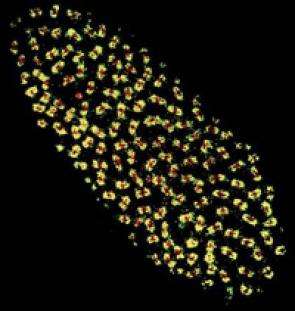
Scientists have made a major breakthrough in understanding the genetics of the insect parasite that is being targeted by researchers as a way of preventing the spread of malaria.
Wolbachia bacteria are parasites that infect as many as 80 per cent of the world's insects and manipulate reproduction in their hosts in order to improve their own transmission.
In species including the fruit fly and mosquito, they do this by altering the sperm of infected males to prevent them from successfully reproducing with uninfected females.
Females infected with Wolbachia produce, on average, more offspring than uninfected females.
This is because they can successfully mate with any male in the population, whereas uninfected females are restricted to uninfected males. As Wolbachia is maternally transmitted, this has the effect of spreading the infection through the insect population.
Researchers around the world have secured millions in research funding to help develop malaria control strategies that use genetically modified Wolbachia that would spread through mosquito populations and carry genes that make their mosquito hosts unable to transmit the plasmodium parasite that cause malaria.
For the first time, in new research published in the journal Genetics, scientists from the University of Bath (UK) and the University of Chicago (USA) have identified two of the genes that Wolbachia manipulates when it infects the fruit fly Drosophila simulans.
"This is a major breakthrough in our understanding of the genetic basis of Wolbachia infection," said Dr Ben Heath, from the Department of Biology & Biochemistry at the University of Bath.
"In recent years there has been great interest in using transgenic Wolbachia as a way of modifying natural populations of insects such as mosquitoes which transmit malaria.
"However this would always be difficult to achieve without a full understanding of the genetics of how Wolbachia interacts with its host insect.
"Our discovery of two of the fruit fly genes manipulated by Wolbachia sheds light on this process, and we should now be able to develop a clearer picture of exactly how Wolbachia manipulate the reproductive process in a variety of its hosts.
"Part of the problem in studying Wolbachia is that it lives inside the cells of its host insect and cannot effectively be studied on its own because it needs the cellular machinery and materials it gets from its host to survive.
"Another difficulty is that the changes it makes in the development of sperm are so subtle that they can be difficult to trace."
In their research the scientists compared the genes that were being expressed – switched on - in infected and uninfected male fruit flies. By subtracting one from the other, they were left with the genes that were being expressed as a result of the Wolbachia infection.
One of the genes they identified, called zipper, is well known to scientists but has never been associated with Wolbachia infection before.
"Infected males have increased expression of their zipper gene compared to those that are uninfected," said Dr Heath.
"We were then able to work with transgenic flies which express the zipper gene more when warmed up slightly for periods of one hour during their development.
"This doesn't harm the flies and provides an opportunity to mimic the effect of Wolbachia in fruit flies that don't carry the bacteria.
"The zipper gene identified by the scientists also interacts with a second gene called lgl which is responsible for polarity within the cell and this becomes important when a cell divides into two different cells, such as when stem cells develop into sperm.
"By affecting the balance between these genes, it appears Wolbachia can promote cytoplasmic incompatibility by modifying the sperm of infected males.
"This prevents the sperm from being compatible with any egg from a female not infected with Wolbachia and results in sterility.
"However when infected males mate with infected females, the Wolbachia in the egg finds a way of correcting the modification to sperm and allows fertilization and normal development to continue."
The researchers are now looking at the mechanisms present in other insect species with different levels of cytoplasmic incompatibility.
In other insects Wolbachia infection has diverse and often dramatic results which all cause an increase in Wolbachia transmission for the simple reason that these bacteria are only transmitted through the maternal line, from mother to daughter.
In two–spot ladybirds Wolbachia kill male offspring leaving the surviving sisters to eat the bodies of their dead brothers, in Woodlice, infected males are turned into females, and infected parasitic wasps give birth without reproducing.
These reproductive effects are what made Wolbachia so fascinating to biologists in the first place and now they may also provide new ways of tackling insect-bourne diseases such as malaria.
Source: University of Bath


