Samsung 4 GB solid state disk to eliminate hard drive delays in Windows Vista-powered PCs
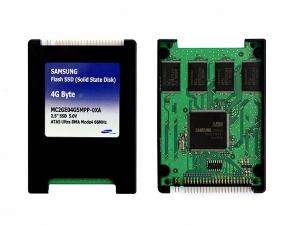
Samsung Electronics today announced that a 4GB solid state disk (SSD), now being readied for production, will also serve as a high speed NAND flash cache for notebooks and PCs in conjunction with the Microsoft Windows Vista operating system.
The device - compatible with Windows ReadyBoost, a new Windows Vista feature that uses flash memory to improve system responsiveness - enables users to avoid the hundreds of annoying multi-second delays they experience every day when moving within and between frequently used applications.
"By caching Hard Drive data using Samsung's flash SSD and the Microsoft Windows Vista operating system, a typical user will see performance gains that will make working with their PC lightning fast," said Don Barnetson, Director, Flash Marketing, Samsung Semiconductor, Inc.
The Windows ReadyBoost feature of the Windows Vista operating system will intelligently populate the SSD with the data a user needs before they ask for it. It readies a user's favorite applications and data in the background, accelerating everyday actions such as starting applications and switching users. When a user requests that data, rather than being limited to servicing 100-200 requests per second (as with a traditional HDD), Samsung's SSD can service up to 5000 request per second, virtually eliminating data seek delays. The 4GB SSD can work in tandem with a hybrid hard drive, coming into play as a secondary source of cached data.
Samsung's new performance booster can be located virtually anywhere on the motherboard and is connected through the ATA port. The flash cache compliments DRAM and because Windows Vista automatically compresses all data stored in a ReadyBoost device, the 4 gigabyte drive would, in practice, act as up to 8 gigabytes of user data.
The new device will also be used in separate applications unrelated to Windows Vista such as for special industrial needs.
Source: Samsung Electronics


