Predators prefer to hunt small-brained prey
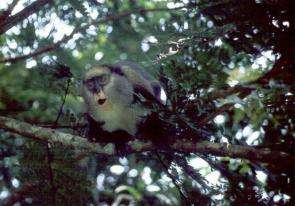
Predators such as leopards and chimpanzees consistently target smaller-brained prey less capable of escape; research at the University of Liverpool has shown.
They avoid more intelligent prey such as monkeys which have exceptionally large brains and are more capable of escaping attacks.
The study, carried out by Dr Susanne Shultz, from the School of Biological Sciences, focused on predators from Africa and South America such as the jaguar, chimpanzee, leopard and puma. Dr Shultz found that prey with a small brain such as small antelope, mongooses and the red river hog were more susceptible to attacks by predators compared with larger-brained prey. The report showed a strong correlation between the brain size of the prey and the predatory bias towards it.
Animals with small brains lack behavioural flexibility and are probably less capable of developing new strategies to escape predators, compared with larger-brained species.
Dr Shultz said: “When these findings are put into perspective, it makes sense that being clever should help individuals avoid or escape danger – the larger-brained chimpanzees rarely feature in the diets of predators.”
“Some animals’ ability to avoid being eaten by predators may be a contributing factor to the evolution of large brains across some species, adding to conventional theories which argue this is important for developing social relationships and using tools.”
Dr Shultz’s research is published in the Royal Society Journal Biology Letters.
Source: University of Liverpool


