Research Peers Inside Hydrogen Fuel Cells
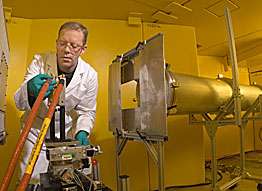
Thanks to a new and improved imaging instrument at the Commerce Department’s National Institute of Standards and Technology (NIST), scientists now can conduct detailed surveillance on the comings and goings of water inside hydrogen fuel cells—a piece of intelligence key to making the technology practical for powering future automobiles.
With visualization powers 10 times better than those achieved previously, researchers can “see” water production and removal in fuel cells under a range of simulated operating conditions, from arctic cold to desert heat.
“This as-it-happens, inside view is essential because fuel-cell performance depends on a delicate balance,” explains NIST physicist Muhammad Arif, who leads the NIST team that developed the instrument. “Too little—or too much—water can shut it down.
”Better water management is fundamental to meeting targets for fuel cell performance, reliability and durability. Reaching these targets, in turn, is integral to efforts to replace petroleum with hydrogen to power cars and trucks by 2020—the goal of President Bush’s Hydrogen Fuel Initiative.
In fuel cells, which actually are stacks of battery-like devices, water is the by-product of the chemical process that uses electrons stripped from hydrogen molecules to generate electricity. With the newly commissioned Neutron Imaging Facility, water quantities smaller than 1 microgram (millionth of a gram) are revealed, and details as small as 0.02 millimeter can be discerned in images. Even better spatial resolution is expected.
Outputs are akin to CAT scans and movies. Images are recorded at a rate of up to 30 frames per second, or 30 times faster than the first-generation instrument that NIST built to demonstrate the usefulness of neutron imaging for fuel cell research.
Located at NIST’s Center for Neutron Research, the research station is operated as a national user facility, open to scientists from industry, universities, and government agencies. It is jointly funded by NIST, the Department of Energy and General Motors.
BACKGROUND
The new facility is located at the NIST Center for Neutron Research (NCNR), where NIST researchers first adapted the imaging technique so that it could be used to peer inside fuel cells. Initial proof-of-concept experiments were carried out in 1997.
The usefulness of the technology was highlighted in a 2005 National Research Council (NRC) review. An expert panel described the imaging method as “one of the most significant analytical advances in the membrane fuel cell realm in decades.” In fact, the NRC’s review of government-industry research directed at hydrogen-fueled transportation systems recommended enhancing neutron imaging capabilities and making them more widely available.
The new research station is operated as a national user facility, open to scientists from industry, universities, and government agencies. It is jointly funded by NIST, the Department of Energy and General Motors. Results of non-destructive neutron-imaging studies will guide work to optimize flows and concentrations of water in the serpentine channels of fuel cells.
The ability to look inside fuel cells—through their maze-like solid housing—is achieved with cone-shaped beams of neutrons, which are ideal for the job. In a sense, the electrically neutral particles only have eyes for hydrogen. Unlike X-rays, neutrons can pass nearly unimpeded through the solid encasements, but they interact strongly with hydrogen. As a result, neutron beams are highly sensitive probes of water, since each molecule contains two hydrogen atoms (and one oxygen atom).
The imaging facility also incorporates safety features and a comprehensive infrastructure to support advanced fuel-cell testing. NIST researchers plan to make additional enhancements, especially in neutron detector technology. This would further improve resolution and reduce the time required to capture an image.
In addition, initial efforts aimed at high-speed, three-dimensional imaging capabilities show promise. The approach, now under development, borrows from astronomical and medical imaging methods.
Although the new facility has been optimized for fuel cell research, it has many potential applications, from evaluations of metalcasting techniques to non-destructive analysis of archeological artifacts.
Additional Information on the instrument, including how to apply to use it, is available on the Internet at www.physics.nist.gov/MajResFac/NIF
Source: NIST


