Scientists explain causes of abrupt rain storms

August 15, 2006 feature
Scientists explain causes of abrupt rain storms

Scientists found that cumulus clouds can create rain showers in a matter of minutes when atmospheric turbulence exceeds a threshold, greatly increasing the rate of droplet collisions. Credit: U.S. National Oceanic and Atmospheric Administration.

No two rain storms are alike. Dark clouds may form slowly throughout the day before a drop of rain falls, and sunny days can suddenly transform into thunderstorms. Different societies throughout history have held their own explanations for the behavior of weather – from human rituals to godly intervention – and now physicists from the U.K. and Sweden tackle one of the weirder weather phenomena: the abrupt rainfall often observed from cumulus clouds.

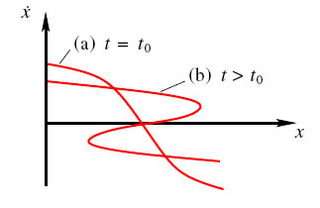
Michael Wilkinson, Bernhard Mehlig and Vlad Bezuglyy explain how quick showers can result from a dramatic increase in the collision rate of microscopic water droplets when the turbulence intensity in the atmosphere exceeds a threshold. Their theory, published in a recent issue of Physical Review Letters, suggests that the collision rate suddenly increases when the velocity of the water droplets as a function of position forms “caustics,” becoming a multi-valued function. When particles at the same position are moving with different velocities, the probability for collision is greatly enhanced.

“Our theory explains how turbulence can help to initiate rainfall,” Michael Wilkinson told PhysOrg.com. “It is relevant to any type of rainfall from cumulus clouds, i.e. the ‘cauliflower’-like clouds that indicate that the atmosphere is undergoing convection.”

Cumulus clouds, which develop vertically due to a convecting atmosphere, can create turbulence because convection transfers heat through circulation. This turbulence can generate the initial energy needed for moisture droplets to coalesce into full-fledged raindrops. (In contrast, stratiform clouds – which develop in horizontal layers – form in a stable atmosphere, and therefore do not elicit immediate wet forecasts.)
Scientists explain causes of abrupt rain storms

This schematic shows the formation of a fold caustic. (A) shows particle velocity as a function of position and no caustics, while (b) shows a situation where particles in the same position have different velocities where the line folds back – a characteristic that results in increased collisions and quick rain showers. Credit: Michael Wilkinson, et al.

In the past, scientists thought that a significant cause of the increased droplet collisions was the particles clustering together in localized regions. Wilkinson and his colleagues found that, although clustering may exist in turbulent atmospheres, it does not greatly influence the collision rate, for a couple reasons. The team discovered that the collision rate remains high even when the clustering effect weakens at high turbulence intensity, and also that clustering requires a higher density than that of the particles in cumulus cloud formations.

Instead, the scientists based their theory off other data captured from previous experiments – namely, that the dramatic increase in the collision rate of droplets occurs when the intensity of air turbulence exceeds a certain threshold, forming caustics.

“The term ‘caustic’ originally comes from the burning effect of focused sunlight,” said Wilkinson. “Later, caustics were bright lines caused by partial focusing of light, often observed on the bottom of a swimming pool when ripples on the surface focus sunlight. More recently, the term has been used for other effects in particle or ray motion that are associated with the graph of a function developing a fold, so that the function becomes multi-valued. In our model, the caustics are points where the graph of water droplet velocity as a function of position folds over (see figure).”

At these multi-valued points, the collision rate jumps so quickly that Wilkinson and his colleagues can explain how rainfall can occur in just a few minutes from the onset of the clouds.

“Although there are no implications for weather forecasting etc., particle collisions in a turbulent gas must have played a role in the formation of planets,” said Wilkinson. “We want to see whether the collisions in our theory have any application in planet formation.”

Citation: Wilkinson, Michael, Mehlig, Bernhard, and Bezuglyy, Vlad. “Caustic Activation of Rain Showers.” Physical Review Letters. 97, 048501 (2006).

By Lisa Zyga, Copyright 2006 PhysOrg.com

4.2 /5 (59 votes)  

Rank 4.2 /5 (59 votes)
Tags

Related Stories
Relevant PhysicsForums posts
  • Wind Turbine Power
    created1 hour ago
  • Steam Table issues
    created3 hours ago
  • electrostatic induction in a conductor should be immpossible
    created7 hours ago
  • Help! Physics Momentum/Impulse problem!
    created10 hours ago
  • Gauss' law cubes, how to prove
    created11 hours ago
  • what is significance of torque
    created13 hours ago
  • More from Physics Forums - General Physics

More news stories

SLAC, Stanford team focuses on high-energy electrons to treat cancer

Accelerator physicists at SLAC and cancer specialists from Stanford are working on a new technology that could dramatically reduce the time needed for cancer radiation treatments. The team ran an initial experiment ...

Physics / General Physics

created 1 hour ago | popularity not rated yet | comments 0

Measurements from high-energy collisions lead to better understanding of why meson particles disappear

For several years, physicists at the Relativistic Heavy Ion Collider (RHIC) at Brookhaven National Laboratory (BNL), USA, have studied an unusual state of matter called the quark–gluon plasma, which they ...

Physics / General Physics

created 1 hour ago | popularity not rated yet | comments 0

Quantum physicist explains $100K offer for proof scaled-up quantum computing is impossible

(PhysOrg.com) -- MIT researcher Scott Aaronson has certainly riled the physics community with his offer this past Friday, of $100,000 to anyone who can prove that scaled-up quantum computing is impossible. ...

Physics / Quantum Physics

created Feb 08, 2012 | popularity 4.1 / 5 (11) | comments 32 | with audio podcast weblog

Explained: Sigma

It's a question that arises with virtually every major new finding in science or medicine: What makes a result reliable enough to be taken seriously? The answer has to do with statistical significance -- but ...

Physics / General Physics

created Feb 09, 2012 | popularity 5 / 5 (13) | comments 26

Physicists 'record' magnetic breakthrough

An international team of scientists has demonstrated a revolutionary new way of magnetic recording which will allow information to be processed hundreds of times faster than by current hard drive technology.

Physics / General Physics

created Feb 07, 2012 | popularity 4.5 / 5 (39) | comments 14 | with audio podcast


Experts reveal how plants don't get sunburn

(PhysOrg.com) -- Experts at the University of Glasgow have discovered how plants survive the harmful rays of the sun.

Fool's gold may prove an unlikely alternative to overexploited catalytic materials

Catalytic materials, which lower the energy barriers for chemical reactions, are used in everything from the commercial production of chemicals to catalytic converters in car engines. However, with current catalytic materials ...

Curry spice component may help slow prostate tumor growth

Curcumin, an active component of the Indian curry spice turmeric, may help slow down tumor growth in castration-resistant prostate cancer patients on androgen deprivation therapy (ADT), a study from researchers ...

Unpicking HIV’s invisibility cloak

Drug researchers hunting for alternative ways to treat human immunodeficiency virus (HIV) infections may soon have a novel target—its camouflage coat. HIV hides inside a cloak unusually rich in a sugar ...

What lies beneath: Mapping hidden nanostructures

The ability to diagnose and predict the properties of materials is vital, particularly in the expanding field of nanotechnology. Electron and atom-probe microscopy can categorize atoms in thin sheets of material, ...

To avoid early labor and delivery, weight and diet changes not the answer

One of the strongest known risk factors for spontaneous or unexpected preterm birth – any birth that occurs before the 37th week of pregnancy, most often without a known cause – is already having had one. For women ...