The IAU draft definition of 'planet' and 'plutons'
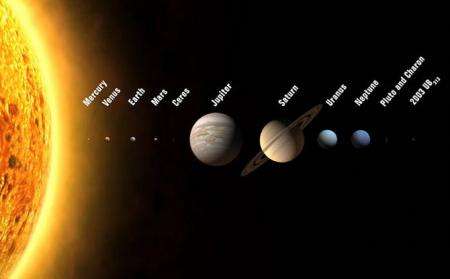
The world’s astronomers, under the auspices of the International Astronomical Union (IAU), have concluded two years of work defining the difference between “planets” and the smaller “solar system bodies” such as comets and asteroids. If the definition is approved by the astronomers gathered 14-25 August 2006 at the IAU General Assembly in Prague, our Solar System will include 12 planets, with more to come: eight classical planets that dominate the system, three planets in a new and growing category of “plutons” – Pluto-like objects – and Ceres. Pluto remains a planet and is the prototype for the new category of “plutons.”
With the advent of powerful new telescopes on the ground and in space, planetary astronomy has gone though an exciting development over the past decade. For thousands of years very little was known about the planets other than they were objects that moved in the sky with respect to the background of fixed stars. In fact the word “planet” comes from the Greek word for “wanderer”. But today hosts of newly discovered large objects in the outer regions of our Solar System present a challenge to our historically based definition of a “planet”.
At first glance one should think that it is easy to define what a planet is – a large and round body. On second thought difficulties arise, as one could ask “where is the lower limit?” – how large, and how round should an asteroid be before it becomes a planet – as well as “where is the upper limit?” – how large can a planet be before it becomes a brown dwarf or a star?
IAU President Ron Ekers explains the rational behind a planet definition: “Modern science provides much more knowledge than the simple fact that objects orbiting the Sun appear to move with respect to the background of fixed stars. For example, recent new discoveries have been made of objects in the outer regions of our Solar System that have sizes comparable to and larger than Pluto. These discoveries have rightfully called into question whether or not they should be considered as new ‘planets.’ ”
The International Astronomical Union has been the arbiter of planetary and satellite nomenclature since its inception in 1919. The world’s astronomers, under the auspices of the IAU, have had official deliberations on a new definition for the word “planet” for nearly two years. IAU’s top, the so-called Executive Committee, led by Ekers, formed a Planet Definition Committee (PDC) comprised by seven persons who were astronomers, writers, and historians with broad international representation. This group of seven convened in Paris in late June and early July 2006. They culminated the two year process by reaching a unanimous consensus for a proposed new definition of the word “planet.”
Owen Gingerich, the Chair of the Planet Definition Committee says: “In July we had vigorous discussions of both the scientific and the cultural/historical issues, and on the second morning several members admitted that they had not slept well, worrying that we would not be able to reach a consensus. But by the end of a long day, the miracle had happened: we had reached a unanimous agreement.”
The part of “IAU Resolution 5 for GA-XXVI” that describes the planet definition, states “A planet is a celestial body that (a) has sufficient mass for its self-gravity to overcome rigid body forces so that it assumes a hydrostatic equilibrium (nearly round) shape, and (b) is in orbit around a star, and is neither a star nor a satellite of a planet.” Member of the Planet Definition Committee, Richard Binzel says: “Our goal was to find a scientific basis for a new definition of planet and we chose gravity as the determining factor. Nature decides whether or not an object is a planet.”
According to the new draft definition, two conditions must be satisfied for an object to be called a “planet.” First, the object must be in orbit around a star, while not being itself a star. Second, the object must be large enough (or more technically correct, massive enough) for its own gravity to pull it into a nearly spherical shape. The shape of objects with mass above 5 x 10²⁰ kg and diameter greater than 800 km would normally be determined by self-gravity, but all borderline cases would have to be established by observation.
If the proposed Resolution is passed, the 12 planets in our Solar System will be Mercury, Venus, Earth, Mars, Ceres, Jupiter, Saturn, Uranus, Neptune, Pluto, Charon and 2003 UB313. The name 2003 UB313 is provisional, as a “real” name has not yet been assigned to this object. A decision and announcement of a new name are likely not to be made during the IAU General Assembly in Prague, but at a later time. The naming procedures depend on the outcome of the Resolution vote. There will most likely be more planets announced by the IAU in the future. Currently a dozen “candidate planets” are listed on IAU’s “watchlist” which keeps changing as new objects are found and the physics of the existing candidates becomes better known.
The IAU draft Resolution also defines a new category of planet for official use: "pluton". Plutons are distinguished from classical planets in that they reside in orbits around the Sun that take longer than 200 years to complete (i.e. they orbit beyond Neptune). Plutons typically have orbits that are highly tilted with respect to the classical planets (technically referred to as a large orbital inclination). Plutons also typically have orbits that are far from being perfectly circular (technically referred to as having a large orbital eccentricity). All of these distinguishing characteristics for plutons are scientifically interesting in that they suggest a different origin from the classical planets.
The draft “Planet Definition” Resolution will be discussed and refined during the General Assembly and then it (plus four other Resolutions) will be presented for voting at the 2nd session of the GA 24 August between 14:00 and 17:30 CEST.
Source: International Astronomical Union


