Loss of just one species makes big difference in freshwater ecosystem, study finds
Researchers at Dartmouth, Cornell University, and the University of Wyoming have learned that the removal of just one important species in a freshwater ecosystem can seriously disrupt how that environment functions. This finding contradicts earlier notions that other species can jump in and compensate for the loss.
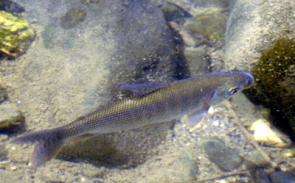
Brad Taylor, currently a research associate in the department of biological sciences at Dartmouth, and his colleagues studied a fish called the flannelmouth characin (Prochilodus mariae) native to South American rivers. This particular fish eats detritus, the fine organic matter on the river bottom, and because of this, it plays a critical role in regulating the breakdown and transport of carbon in the rivers.
"This fish species is a popular food source; it is harvested regularly, and in some cases, it's overfished," says Taylor, the lead author on the study that was published in the August 11 issue of the journal Science. "We learned that removing this particular fish greatly altered the metabolic activity of the river ecosystem. Other fish species did not compensate for the lack of Prochilodus, an effect consistent with observations from other rivers where they have been excluded much longer by dams."
The researchers used a heavy, plastic divider to split a 210-meter stretch (a little more than a tenth of a mile) of Rio Las Marías in Venezuela into two separate river sections. On one side, they removed only Prochilodus, and on the other, all the fish remained. The team then took a series of measurements upstream and downstream to quantify the transport of particulate organic carbon (POC).
"Although there are more than 80 fish species in this small river, the detritivores, like Prochilodus, make up 50-80 percent of the fish biomass. Their abundance makes them attractive targets for harvesting by people. So when we took them away, not only was the impact astounding, it also revealed how their loss could change carbon flow, an important measure of ecosystem function," says Taylor.
During a six-year period, Taylor and his team discovered a strong association between Prochilodus abundance and the downstream transport of POC. With Prochilodus present, the organic carbon was distributed more evenly along the length of the river. Without Prochilodus present, large amounts of organic carbon accumulated in upstream areas, and it was consumed by bacteria, and therefore not readily available to organisms living farther downstream. In contrast to other migratory fish species, like salmon, that provide nutrients to the river (in the form of their carcasses), this species modifies the availability of nutrients through its activities. The researchers learned that the loss of Prochilodus increased the rate at which organic carbon was converted to carbon dioxide, which could increase the flux of carbon dioxide from the river to the atmosphere, a topic Taylor will be exploring in the coming months.
"We also used the wealth of information contained in museum specimens of Prochilodus collected over the past 28 years from throughout the Orinoco basin in Venezuela to document that the maximum body size of individuals has declined dramatically, from about 2.2 pounds to a half a pound, which is a hallmark of overharvested populations" says Taylor. "Although over hundreds or thousands of years other species may fill the role played by Prochilodus, but people and other organisms are highly dependent on the services provided by Prochilodus now. We hope that our study draws the attention of governments and scientists to protect and study the importance of the smaller and more abundant organisms, which constitute most of the Earth's biodiversity and are now being heavily targeted by humans. In many parts of the world this task will not be easy because there is little enforcement of existing fishing laws and many people depend on such species as their primary source of affordable animal protein."
Source: Dartmouth College


