Study Solves Ocean Plant Mystery
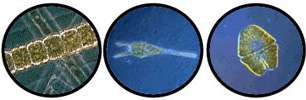
A NASA-sponsored study shows that by using a new technique, scientists can determine what limits the growth of ocean algae, or phytoplankton, and how this affects Earth's climate.
Phytoplankton is a microscopic ocean plant and an important part of the ocean food chain. By knowing what limits its growth scientists can better understand how ecosystems respond to climate change.
The study focused on phytoplankton in the tropical Pacific Ocean. It is an area of the ocean that plays a particularly important role in regulating atmospheric carbon dioxide and the world's climate. This area of the ocean is the largest natural source of carbon dioxide to the atmosphere.
"We concluded that nitrogen is the primary element missing for algae growth and photosynthesis in the northern portion of the tropical Pacific, while it was iron that was most lacking everywhere else," said Michael J. Behrenfeld, an ocean plant ecologist from Oregon State University, Corvallis, Ore.
Scientists determined when phytoplankton is stressed from lack of iron; it appears greener, or healthier than they really are. Normally, greener plants are growing faster than less green plants. When iron is lacking, enhanced greenness does not mean phytoplankton are growing better. They are actually under stress and unhealthy. These conclusions solved the mystery why healthy looking phytoplankton are actually not so healthy.
"Because we didn't know about this effect of iron stress on the greenness of algae or phytoplankton before, we have always assumed that equally green waters were equally productive," Behrenfeld said. "We now know this is not the case, and that we have to treat areas lacking iron differently."
For the tropical Pacific, correction for this "iron-effect" decreases scientists' estimates of how much carbon ocean plants photosynthesize for the region by roughly two billion tons. This figure represents a tremendous amount of carbon that remains in the atmosphere that scientists previously thought were being removed.
The results about the false health of phytoplankton allow scientists using computer models to re-create the movement of carbon around the world much more accurately. Resource managers will become more knowledgeable about where carbon is going and the impact of recreational, industrial or commercial processes that use or produce carbon. Researchers better understand the Earth as an ecosystem, and can incorporate these findings in future modeling, analysis and predictions.
While satellite data from NASA's Sea-viewing Wide Field-of-view Sensor played an important part in the study, the real cornerstone of the discovery was ship-based measurements of fluorescence.
Fluorescence occurs when plants absorb sunlight and some of that energy is given back off again as red light. Scientists looked at approximately 140,000 measurements of fluorescence made from 1994 to 2006 along 36,040 miles of ship tracks. They found that phytoplankton give off much more fluorescence when the plants do not have sufficient iron. It is this signal they used to fingerprint what parts of the ocean are iron-stressed and what parts are nitrogen-stressed.
It is important that scientists understand how ocean plants behave because all plants play a critical role in maintaining a healthy planet. Plants annually take up billions of tons of carbon dioxide from the atmosphere through photosynthesis and use this carbon to create the food that nearly all other organisms on Earth depend on for life.
Nutrients that make ocean plants thrive, such as nitrogen and phosphate, mostly come from the deep parts of the ocean, when water is mixed by the wind. Iron also can come from dust blowing in the air.
Approximately half of the photosynthesis on Earth occurs in the oceans, and the remainder on land. Ocean and land plants share the same basic requirements for photosynthesis and growth. These requirements include water, light and nutrients. When these three are abundant, plants are abundant. When any one of them is missing, plants suffer.
An article on this technique appears in a recent issue of Nature.
Source: NASA


