Rice domestiction confiirmed genetically
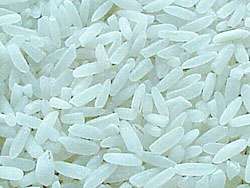
Biologists from Washington University in St. Louis and their collaborators from Taiwan have examined the DNA sequence family tree of rice varieties and have determined that the crop was domesticated independently at least twice in various Asian locales.
Jason Londo, Washington University in Arts & Sciences biology doctoral candidate, and his adviser, Barbara A. Schaal, Ph.D., Washington University Spencer T. Olin Professor of Biology in Arts & Sciences, ran genetic tests of more than 300 types of rice, including both wild and domesticated, and found genetic markers that reveal the two major rice types grown today were first grown by humans in India and Myanmar and Thailand (Oryza sativa indica) and in areas in southern China (Oryza sativa japonica).
A paper describing the research was published in the June 20, 2006 issue of the Proceedings of the U.S. National Academy of Sciences.
"We chose samples across the entire range of rice and looked for DNA sequences that were shared by both wild and domesticated types," said Londo. "These two major groups clustered out by geography."
DNA is comprised of vast, varied combinations of chemical subunits known as base pairs. Londo, Schaal and their collaborators concentrated on finding genetic markers shared by both cultivated and wild rice types that ranged from 800 to 1,300 base pairs.
Cultivated rice has a genetic signature that defines it as cultivated, Schaal explained.
"What you do is go out and sample all the wild rice across regions and you look for that signature in the wild," said Schaal, who has done similar work with cassava and Jocote (a tropical fruit). "You find that the unique signature of cultivated rice is only found in certain geographic regions. And that's how you make the determination of where it came from."
Schaal said that she was surprised and "delighted" by their results.
"People have moved rice around so much and the crop crosses with its wild ancestors pretty readily, so I was fully prepared to see no domestication signal whatsoever,," Schaal said.
"I would have expected to see clustering of the cultivated rice, but I was delighted to see geographical clustering of the wild rice. I was thrilled that there was even genetic structure in the wild rice."
In contrast to rice, other staple crops such as wheat, barley and corn appears to have been domesticated just once in history.
Rice is the largest staple crop for human consumption, supplying 20 percent of caloric content for the world.
By finding the geographic origins of rice, researchers can consider ways to improve the crop's nutritional value and disease resistance, which in turn can help impoverished populations in Asia and elsewhere that rely heavily on the crop.
A third type of rice might have originated independently in India, but the researchers can't be certain, said Londo, because "with two of the gene networks we see sharp similarities, but with a third one that emerges from the data we don't have enough resolution."
Londo expects to find even more evidence for differing geographic domestication. He said that by using the database that they've gathered, they could design a sampling to target specialty rices such as the aromatic rices basmati and jasmine.
For instance, one direction that the researchers are going is Thailand, where the Karen tribe has been using multiple landraces of rice for many hundreds of years, Landraces are localized varieties of rice that have been cultivated by traditional methods and have been passed down many generations, Schaal said. "We're going to try to find out how landrace varieties change after domestication. These landraces are ancient varieties, which are high in genetic diversity, thus valuable to breeders looking for new traits."
Source: Washington University in St. Louis, By Tony Fitzpatrick


