Joint Quantum Institute Created by University of Maryland, NIST and NSA

Today, the University of Maryland (UM), the Commerce Department’s National Institute of Standards and Technology (NIST), and the National Security Agency (NSA) announced the creation of a joint research institute designed to advance quantum physics research—deciphering the secrets of nature at the submicroscopic scale—and to exploit this knowledge to transform quantum technology from an exciting promise to practical reality.
A memorandum of understanding establishing the Joint Quantum Institute (JQI) has been signed by C.D. Mote Jr., president of the university; William Jeffrey, director of NIST; and Frederick R. Chang, director of research for the NSA.
The institute will be located on the University of Maryland campus in College Park. It will have an annual budget of approximately $6 million and a staff of about 20 scientists, half from the university and half from NIST. The staff will include experts in atomic physics, condensed matter and quantum information, including William D. Phillips, the 1997 Nobel laureate in physics, who is both a NIST Fellow and a Distinguished University Professor of Physics at Maryland. Co-directors for the institute are Christopher J. Lobb, professor of physics at Maryland, and Carl J. Williams, chief of the NIST Atomic Physics Division.
The three participating institutions have a shared history of collaboration and cooperation in education, research and public service. They have long cooperated in building collaborative research consortia and programs that have resulted in extensive personal, professional and institutional relationships.
For the University of Maryland and NIST, the new institute is the latest of several major new collaborative efforts initiated since the two institutions signed an agreement in 2003 to broadly expand research collaborations and professional linkages. Last year the two institutions created the UM-NIST Center for Nanomanufacturing and Metrology, a joint venture created to advance the science and technology of manufacturing products based on the unique properties achieved at the scale of a nanometer.
The objectives of the new Joint Quantum Institute will be to:
-- Develop a world-class research institute that will build the scientific foundation for understanding coherent quantum phenomena and thereby lay the foundation for engineering and controlling complex quantum systems capable of using the coherence and entanglement of quantum mechanics (see backgrounder below for definitions and details);
-- Maintain and enhance the nation’s leading role in high technology through the creation of a powerful collaboration among NIST, UM and NSA; and
-- Establish a unique, interdisciplinary center for the interchange of ideas among atomic physics, condensed matter and quantum information scientists.
In pursuing these objectives, the JQI is expected to train scientists and engineers for future industrial opportunities and provide U.S. industry with cutting-edge research results.
The JQI’s three primary scientific disciplines are: atomic, molecular and optical physics (such as ultra-cold atomic gases, matter wave optics, quantum optics and optical lattices), a major area of expertise at NIST and a growing strength at UM; condensed matter physics (such as quantum dots and superconductivity), an area of expertise at UM and the NSA’s Laboratory for Physical Sciences; and quantum information science (such as quantum measurement theory, quantum computation and quantum communication), areas of expertise at both NIST and UM. The NSA is a long-standing supporter of and collaborator in research in these fields.
Among its benefits, the JQI is expected to leverage the combination of a government laboratory’s emphasis on developing practical metrology tools directed at national needs with an academic focus on scientific exploration. From NIST’s perspective, the new institute is modeled in part on JILA, a joint institute of NIST and the University of Colorado at Boulder. Since its founding in the 1960s, JILA has become one of the nation’s leading research institutes in the physical sciences, with a faculty that includes three Nobel laureates (two from NIST) and two MacArthur Fellows (one from NIST).
As a non-regulatory agency of the Commerce Department’s Technology Administration, NIST promotes U.S. innovation and industrial competitiveness by advancing measurement science, standards and technology in ways that enhance economic security and improve our quality of life.
The University of Maryland has one of the nation’s leading university physics departments with particular strengths in the areas relevant to quantum technology research. The Physics Department of the University of Maryland was ranked 15th among all universities in 2006 by U.S. News and World Report and was the only university to be ranked in the top 10 in (1) quantum physics, (2) condensed matter/solid state physics, and (3) atomic, molecular and optical physics, the key fields of this new joint institute.
Research Objectives of the Joint Quantum Institute
We are on the verge of a new technological revolution as the strange and unique properties of quantum physics become practical tools in information science and technology. Research in quantum information seeks to control and use these properties for scientific and societal benefits.
Quantum information science relies on using individual atoms, molecules, and other tiny particles or single “quantum” objects to store, process, and transport data. Researchers already are using quantum information science to generate codes for ultra-secure encryption. They may someday build quantum computers that can solve problems in seconds that today’s best supercomputers could not solve in years. Advances in quantum information science have the potential to expand and strengthen the U.S. economy and security in the 21st century just as transistors and lasers did in the 20th century.
The Joint Quantum Institute (JQI) will accelerate advances in this critical field. Benefits will include improved security for electronic commerce, maintenance of the U.S. lead in computing and information processing, improved accuracy for electrical and other standards based on better understanding of quantum systems, and establishment of U.S. industry as the leader in the emerging field of quantum engineering.
Our ability to exploit quantum phenomena is still at a very primitive stage. A challenging goal is to learn how to scale up from simple systems with just a few components to the sizes necessary for applications. For instance, a quantum computer can in principle rapidly factor large numbers, a mathematical problem whose difficulty provides the security of today’s public key encryption algorithms. To construct a quantum computer will require numerous advances in coherent (or error-free) quantum phenomena as we learn how to preserve the “quantumness” of systems while still exerting control over them. Unfortunately, the properties that could give a quantum computer its special power are difficult to maintain in large systems. We have much to learn about individual quantum systems, how to connect them, how to control them, how to measure them, and how to fix the inevitable errors.
The JQI will gather scientists from the Physics Department of the University of Maryland (UM), the Physics Laboratory of the National Institute of Standards and Technology (NIST), and the Laboratory for Physical Sciences of the National Security Agency (LPS/NSA). UM, NIST, and LPS/NSA bring to the JQI major experimental and theoretical research programs already dedicated to the goals of controlling and exploiting quantum systems. The three institutions provide a unique combination of strengths in atomic, molecular and optical physics and condensed matter physics.
Some of the topics currently being studied, which form the research basis of the JQI, are:
-- Quantum properties of superconducting quantum bits (experiments under way at UM, theory being developed at UM and NIST)
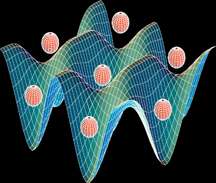
-- Quantum entanglement, control, and transport of atoms in cavities and optical lattices, egg-carton-shaped “containers” made of intersecting laser beams (experiments and theory work under way at UM and NIST)
-- Decoherence studies with atoms and condensed matter systems (UM, NIST)
-- Spin- and charge-based quantum computing (UM, NIST, and LPS)
-- Using topology to do fault-tolerant quantum computing (UM)
-- Quantum coherence and entanglement (UM, NIST, and LPS)
-- The quantum-classical interface (UM, NIST, and LPS)
-- Quasi-one-dimensional fluid flow as an analog to superconductivity (UM, NIST)
-- Using the bi-layer quantum Hall effect for quantum computing (UM)
-- Quantum analog simulations of condensed matter systems using neutral atoms in optical lattices (NIST, UM)
By combining the strengths of UM, NIST, and LPS/NSA in the broad range of quantum topics studied, the JQI can become the international center for excellence in the study, manipulation, and exploitation of the unusual properties of quantum physics.
Note:
Entanglement:
A Curious Property That May Be Useful
As an example of how quantum physics can be useful, entanglement is a curious property that links the condition and behavior of two or more particles. Entanglement can occur spontaneously when two atoms interact, for instance. For the interaction to begin, the atoms have to be in close proximity, but their entanglement may persist even if they are physically moved apart. Entanglement could have many uses in large quantum computers and networks. For instance, it is required for "teleportation" of information, a process that could be used to rapidly transfer data between separate parts of a quantum computer, or to detect and correct minor operational errors.
Source: NIST, University of Maryland


