Unpublished Papers Reveal Lesser-known, but Significant Research of Sir Issac Newton
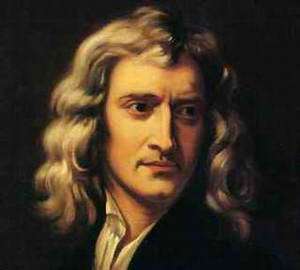
Known primarily for his foundational work in math and physics, Sir Issac Newton actually spent more time on research in alchemy, as well as its interrelationships with science, history and religion, and its implications for economics.
Alchemy, as Newton practiced it in the 17th and 18th centuries, was research into the nature of chemical substances and processes – primarily the transmutation of materials from one type of matter to another. Newton and others conducted experiments, but also incorporated philosophical thought in their attempts to uncover the mysteries of the physical universe.
“Newton’s extensive work on universal history (which presents human history as a coherent unit governed by certain immutable principles) provides an essential setting for linking his work on alchemy and his work heading England’s mint in the 1690s,” said Georgia Institute of Technology Professor Kenneth Knoespel, who chairs the School of Literature, Communication and Culture. “It is not at all farfetched to think of history as a kind of alchemical process that looks to the creation of value and wealth.”
Knoespel will present an invited talk titled “Newton’s alchemical work and the creation of economic value” at 9 a.m. Pacific time Sept. 11 at the American Chemical Society’s 232nd national meeting in San Francisco. The talk is part of a session dedicated to scholarship based on the unpublished manuscripts of Newton, most of which are housed at the University of Cambridge and in the Edelstein Center at Hebrew University in Jerusalem. For the past 15 years, Knoespel has studied both collections -- some portions of which weren’t available to scholars until the 1970s.
By integrating the study of these manuscripts, Knoespel determined that Newton’s alchemical practice “functions as a translation code for a new language of economics in which an investigation of material-spiritual value becomes transformed into a systematic structure of social value understood through economics.”
Newton began to translate his notions of value in alchemy to an economic setting when he was appointed to head England’s mint – several years after the 1687 publication of “The Principia,” in which Newton described universal gravitation and the three laws of motion, laying the groundwork for classical mechanics.
“Newton moves from an academic research position to a position of considerable visibility within the state,” Knoespel noted. “He became the symbol of the stability of the British economy at this time. It is hardly an exaggeration to think of such a move as involving a shift from private research to the broad application of policy formed by decades of private research.”
Newton took the new job very seriously, undertaking new research on the history of money and combining it with his work in mathematics, alchemy and metallurgy. He improved the edging of coins, much like U.S. coins are formed today, to prevent people from clipping the edges. Newton also assayed the coins of Europe to determine the amount of gold and silver they contained to help establish England’s economic basis.
As the economic system of capitalism began to be institutionalized in Europe in the decades following Newton, many “thought that capital, or value, within capitalism was being mystified in the same way that gold is within its alchemical transformation,” Knoespel said.
Furthermore, Knoespel asserted, “I believe that Newton thought by improving the English economic system, he was going to contribute to the ongoing transformation of England into God’s kingdom on Earth. A Newtonian approach to matter carries with it a Messianic force that finally grounds itself in natural philosophy that includes an interpretation of human and natural history.
“Newton never makes economic value the sole force that determines history. Instead, the practice of economics is at least twofold, involving both the practice of a monetary system and a conceptual framework that sees within an economic system, the workings of God in time,” he added.
Connecting the published work of Newton the mathematician and the physicist with the unpublished work of Newton the alchemist, historian and religious philosopher provides broader insight into his legacy, Knoespel said.
“The history of science has often separated Newton the complex mathematician from the Newton of the Newtonians,” he explained. “The purists say: ‘Newton is a mathematician and a physicist. Don’t mix him up with religion or alchemy because you’ll turn him into Harry Potter.’”
But it is this purist belief that for 200 years suppressed Newton’s unpublished work in alchemy until the mid-20th century, Knoespel said. “I’m certainly not interested in making Newton into an occult figure,” he added. “Newton was profoundly interested in the relationship between physics and religion. That he was, but that doesn’t turn him into a magician.”
Source: Georgia Institute of Technology


