Will stem cell-based treatments make a difference to the developing world?
Developing countries are increasingly struggling to manage epidemic rates of chronic diseases, like diabetes, stroke, and heart disease, and it is expected that stem cell research could lead to better treatments for such chronic conditions.
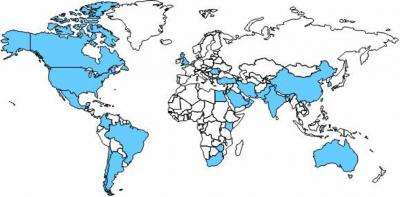
In the study, by Abdallah Daar (McLaughlin Centre for Molecular Medicine, University of Toronto) and colleagues, an international panel of 44 experts ranked the ten most promising applications of regenerative medicine for improving health in developing countries. The experts included researchers in disciplines contributing to regenerative medicine and clinicians working in fields that will be at the forefront of applying regenerative medicine therapies.
The top-ranked application was novel methods of insulin replacement and pancreatic islet cell regeneration for diabetes. The panelists ranked this number one because of the high prevalence of diabetes in developing countries and the major health, social, and economic burden that results. Panelists emphasized that controlling diabetes would in turn reduce the incidence of diabetes complications such as blindness, heart disease, chronic kidney disease, and diabetic ulcers.
The panelists noted that repeated insulin treatments are costly and inaccessible to many patients in developing countries. They felt that regenerative medicine therapies, such as bone marrow stem cell transplantation or microencapsulated islet cells using new biomaterials, could provide a permanent solution to treating diabetes and reduce the financial burden caused by the purchase of insulin.
The second-ranked application was regenerating failed heart muscle using the patient's own cells, injected directly or introduced via patches, for treating heart muscle damage due to a heart attack or a cardiomyopathy (a condition causing weakness of the heart muscle). Panelists noted that such therapy shows promising early results, and is being tested in clinical trials in a number of countries.
Other highly ranked applications were immune system enhancement by engineered immune cells, new vaccination strategies for treating infectious diseases, new stem cell-based technologies for replacing skin loss due to burns, wounds, and diabetic ulcers, and new blood substitutes.
The study results, say the authors, "may be used as a guide for the policy formulation of international and bilateral aid agencies, and by developing countries to help target policy aimed at initiating or developing further their existing capacity in regenerative medicine."
On the Net: dx.doi.org/10.1371/journal.pmed.0030381
Source: Public Library of Science


