Scientists explain why insects don’t get fat
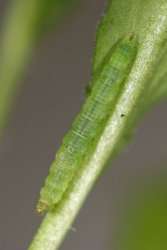
Insects don’t get fat, and why they don’t may help our understanding of what has been described as the current human obesity epidemic.
The research team from Oxford’s Zoology Department, Texas A&M University, the University of Sydney and the University of Auckland conducted a series of experiments to find out whether caterpillars could adapt to extreme changes in their nutritional environment.
In their study ‘Evolving resistance to obesity in an insect’, published in the Proceedings of the National Academy of Science, they found that diamondback moth caterpillars evolved different physiological mechanisms related to fat metabolism. Which mechanism was used depended on whether the caterpillars were given carbohydrate-rich or carbohydrate-poor food. The researchers believe that caterpillars – and animals in general – can evolve metabolically to adjust to extreme nutritional environments.
The researchers studied the insects over eight generations. In one experiment, they fed caterpillars artificial diets that were rich in protein and low in carbohydrates; at other times the caterpillars received diets low in protein and high in carbohydrates.
In a second experiment, caterpillars were allowed to eat freely one of two plants, an Arabidopsis mutant low in starch or an Arabidopsis mutant high in starch.
When the caterpillars were reared in carbohydrate-rich environments for multiple generations, they developed the ability to eat excess carbohydrate without adding fat to their bodies. On the other hand, those reared in carbohydrate-poor environments showed an ability to store ingested carbohydrates as fat.
Also, after multiple generations on the low-starch plants, female moths preferred to lay their eggs on these same plants. The researchers explain that it is one of the first instances of a moth showing egg-laying behaviour that is tied to a plant’s nutritional chemistry.
The researchers believe moths from low-starch plans might avoid high-starch plants because they might make their offspring obese. Female moths reared on the high-starch plant for multiple generations showed no preference.
The inference made by the researchers is that like insects, humans require carbohydrates and proteins, but that humans are not well adapted to diets containing extremely high levels of carbohydrates – a radically different diet to that of our ancestors. However, they say, lack of exercise might be another factor in why humans convert excess carbohydrate to fat.


