Researcher challenges movies unscientific aliens
Is there life on other planets? And if so, are they the little green men of science fiction?
Professor Ian Stewart from the University of Warwick thinks there is life on other planets and while it could be little and green, it’s highly unlikely to be anything we would recognise as men. Despite our fascination with science fiction it seems our imagination rarely extends beyond pointed ears and different coloured skin when we picture alien races. Now an exhibition at London’s Science Museum addresses just what alien life might look like when it develops on planets with different physical and chemical properties to our own.
Apply scientific principles and alien life might be very alien indeed. As a scientist who is also a science fiction writer, Professor Stewart was one of the early advisors to the Exhibition and is uniquely positioned to comment on what alien life could really be like!
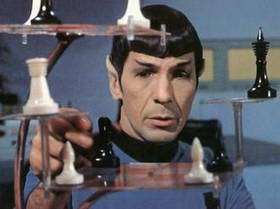
Professor Stewart argues that popular culture fails miserably to give us anything approaching a scientifically sound idea of what an alien could look like. Many authors and film-makers simply rely on making their aliens in our humanoid image such as Star Trek's Mr Spock or Klingons. Even when a bit more imagination is used science is ignored in favour of simply reproducing the cosyily familiar such as the teddy bear like Ewoks in the film Return of the Jedi, or the remarkable resemblance of ET to the size and behavior patterns of a human toddler.
When they are not being cuddly The aliens on our TV and film screens have become a "quasi-scientific stand-in" for ghosts, ghouls and fairies, or modern-day bogeymen or drawing on our phobias of real and mythical animals like spiders, snakes and dragons.
The most famous unscientific dragon shaped alien comes from the Alien series which has an unlikely life cycle which faces a number of serious scientific problems as Professor Stewart says:
"The dragonesque alien queen lays her eggs, which are apparently about the size of a football, in the open where they apparently wait for thousands of years for a spaceship to land near them. When it does, any that have survived hungry egg-eaters for all that time hatch out. They have the immediate ability to invade terrestrial mammalian hosts and live inside them, where the nutrients are just right for them. How did they become able to avoid our tissue-recognition immune system? Or how to design just the right local anaesthetic so that the host doesn't know he's got an object the size of his heart - extra - in his chest? Are they turned to people, in fact, or are they general-purpose parasites - a concept that would make any parasite specialist scream?"
Professor Stewart argues that "We've got to get away from all those comfortable ideas that aliens will be just like us, except for a few minor differences that don't challenge our imagination. - real aliens will be very alien indeed."
The truly alien may inhabit planets utterly different from earth. Many different habitats can theoretically support life, not just a water and oxygen based planet. Anywhere that physical matter exists and there is an energy source could lead to the development of something of sufficient complexity that we would categorise it as "life".
Even on earthlike planets life could be very different - The development of spines and skeletons is, he says, an evolutionary accident that could well be unique to Earth. "If you ran Planet Earth again, the chances are you wouldn't get vertebrates. You wouldn't get creatures with a jointed spine."
Source: University of Warwick


