Altered Perception of Reward in Human Cocaine Addiction
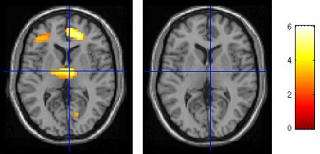
People addicted to cocaine have an impaired ability to perceive rewards and exercise control due to disruptions in the brain’s reward and control circuits, according to a series of brain-mapping studies and neuropsychological tests conducted at the U.S. Department of Energy’s Brookhaven National Laboratory.
“Our findings provide the first evidence that the brain’s threshold for responding to monetary rewards is modified in drug-addicted people, and is directly linked to changes in the responsiveness of the prefrontal cortex, a part of the brain essential for monitoring and controlling behavior,” said Rita Goldstein, a psychologist at Brookhaven Lab. “These results also attest to the benefit of using sophisticated brain-imaging tools combined with sensitive behavioral, cognitive, and emotional probes to optimize the study of drug addiction, a psychopathology that these tools have helped to identify as a disorder of the brain.”
Goldstein will present details of these studies at a press conference on neuroscience and addiction at the Society for Neuroscience (SfN) annual meeting in Atlanta, Georgia, on Sunday, October 15, 2006, 2 to 3 p.m., and at a SfN symposium on Wednesday, October 18, 8:30 a.m.
Goldstein’s experiments were designed to test a theoretical model, called the Impaired Response Inhibition and Salience Attribution (I-RISA) model, which postulates that drug-addicted individuals disproportionately attribute salience, or value, to their drug of choice at the expense of other potentially but no-longer-rewarding stimuli — with a concomitant decrease in the ability to inhibit maladaptive drug use. In the experiments, the scientists subjected cocaine-addicted and non-drug-addicted individuals to a range of tests of behavior, cognition/thought, and emotion, while simultaneously monitoring their brain activity using functional magnetic resonance imaging (fMRI) and/or recordings of event-related potentials (ERP).
In one study, subjects were given a monetary reward for their performance on an attention task. Subjects were given one of three amounts (no money, one cent, or 45 cents) for each correct response, up to a total reward of $50 for their performance. The researchers also asked the subjects how much they valued different amounts of monetary reward, ranging from $10 to $1000.
More than half of the cocaine abusers rated $10 as equally valuable as $1000, “demonstrating a reduced subjective sensitivity to relative monetary reward,” Goldstein said.
“Such a ‘flattened’ sensitivity to gradients in reward may play a role in the inability of drug-addicted individuals to use internal cues and feedback from the environment to inhibit inappropriate behavior, and may also predispose these individuals to disadvantageous decisions — for example, trading a car for a couple of cocaine hits. Without a relative context, drug use and its intense effects — craving, anticipation, and high — could become all the more overpowering,” she said.
The behavioral data collected during fMRI further suggested that, in the cocaine abusers, there was a “disconnect” between subjective measures of motivation (how much they said they were engaged in the task) and the objective measures of motivation (how fast and accurately they performed on the task).
“These behavioral data implicate a disruption in the ability to perceive inner motivational drives in cocaine addiction,” Goldstein said.
The fMRI results also revealed that non-addicted subjects responded to the different monetary amounts in a graded fashion: the higher the potential reward, the greater the response in the prefrontal cortex. In cocaine-addicted subjects, however, this region did not demonstrate a graded pattern of response to the monetary reward offered. Furthermore, within the cocaine-addicted group, the higher the sensitivity to money in the prefrontal cortex, the higher was the motivation and the self-reported ability to control behavior.
The ERP results showed a similarly graded brain response to monetary reward in healthy control subjects, but not in cocaine-addicted individuals.
“The dysfunctional interplay between reward processing and control of behavior observed in these studies could help to explain the chronically relapsing nature of drug addiction,” Goldstein said. “Our results also suggest the need for new clinical interventions aimed at helping drug abusers manage these symptoms as part of an effective treatment strategy.”
Source: Brookhaven National Laboratory


