November 11, 2005 feature
IBM 3D TV
International Business Machines, a worldwide leader in technology innovation, has announced a new and affordable 3D video system that works with normal DLP (Digital Light Processing) televisions. Before now, 3D video systems would set you back at least $1,800 while the price of IBM’s new system is expected to be only $1000 – if only a grand sounds cheap to you.
This “black box” device can be connected to any DLP projector or television via the common VESA (Video Experts Standards Association) 3 pin stereo connector.
IBM demonstrated the new system on a 50-inch, flat-screen Texas Instruments rear-projection digital television at the 22nd annual Flat Information Displays conference held in San Francisco this month.
"This was on the drawing board for about two years and now we're at the conceptual proof-of-concept stage. We are here to look for a manufacturing partner to bring the technology to market," said Jim Santoro, a technology license program manager from IBM's office in Poughkeepsie near IBM’s corporate headquarters in Armonk, New York.
IBM tends to develop cutting edge technology and then license it to third party manufactures rather than build and sell finished products. This strategy allows them to keep pouring funds in to basic research and cutting edge technology. It also permits wide dissemination of it’s technologies throughout the industry increasing chances for permanent adoption over competing technologies.
Exact details concerning the 3D technology – still unnamed – were not forthcoming, but the company spokesperson said it was compatible with OpenGL and Direct Draw – both software components of the Microsoft Windows operating system that allow programmers to manipulate video for computer games.
While 3D monitors and projectors have been around for a few years, IBM’s approach is the first to use a single projector to simulate both left and right views needed to form 3D image. Normal 3D units need two projectors.
IBM has managed to alternate the video frames to give the appearance of double projectors without the added cost. This means adding video frames – lots of them. While normal “live” video is 30 frames per second, this device processes 144fps. First you see the frames from the left and then the right perspective giving the image an authentic three dimensional look.
While technical details are scare, the device obviously uses some serious video processing hardware to build the 3D image: 144fps video is far beyond the capacity of almost all computer graphics cards.
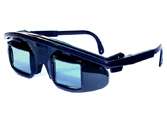
On the downside, you still need 3D glasses to correctly view the image and practically no video is shot in 3D as it requires more expensive cameras, but as price drops and general interest rises, this is sure to change.
Some sports TV networks have expressed interest in filming NFL games in 3D. To shoot in 3D, TV networks would need to install expensive 3D cameras and image processing hardware.
The OpenGL and Direct Draw compatibility is definitely aimed at software developers who make games – computer gaming is a multi-billion dollar industry. Imagine being able to play Halo 2 in 3D – VERY cool. The technology also lends its self to the creation of high end presentation software – think 3D Power Point.
While this technology is definitely more economical than current models and its PC compatibility may usher in a host of 3D games, it still may become obsolete with the introduction of the holy grail of 3D displays – inexpensive models that do not require funky glasses. Now that would truly be something.
by Chuck Rahls, Copyright 2005 PhysOrg.com
Image source: edimensional.com


