Bats More than Just Another Pretty Face
October 30, 2006 Bats More than Just Another Pretty Face

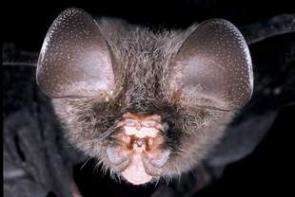
Earthwatch volunteers are amazed by the intricate design of special adaptations that make each bat in Krau Wildlife Reserve special, such as this Coelops robinsoni. Credit: Tigga Kingston

Most people view bats as disagreeable things that go bump in the night, but there is much more to these small, winged mammals. Earthwatch volunteers from around the world are traveling to Malaysia to explore the world of bats in the rich, lowland rainforest of Krau Wildlife Reserve.

“This 30-million-year-old rainforest is a bat paradise,” said Dr. Tigga Kingston, assistant professor of biology at Texas Tech University and principal investigator of Earthwatch’s Malaysian Bat Conservation project. “It is home to the greatest diversity of insect-eating bats in the world, with at least 60 species. When the fruit-eating bats are included, the species list tops 71 bats.”

For four years, Earthwatch teams have been helping Kingston monitor bats in Krau Wildlife Reserve, using “harp” traps to capture the flying mammals and banding them for further study. Not only do volunteers gain a rare chance to explore parts of this ancient rainforest that are off-limits to tourists, they find a unique perspective on how important bats are.

“For me and the other volunteers on my expedition, this was an amazing opportunity to work with these animals up close,” said volunteer Ed Barker. “Bats are incredibly delicate, voracious insect eaters, with a highly sophisticated ability to move through the jungle. Helping to understand what role they play in forest ecosystems was really rewarding.”

Kingston recently summarized her four years of trapping at the 36th Annual North American Symposium on Bat Research, in Wilmington, NC, October 18-21. She reported nearly 16,000 bat captures at five sites, probably one the most intensive studies of bat “assemblages” in the world, including 38 species in six families.

Bat assemblages generally include all the bats in a given area. Kingston reported that bat assemblages in Krau Wildlife Reserve vary drastically from one site to another, and from one time to another. This finding poses new challenges for scientists studying the evolution of bats, as well as those trying to conserve bat populations in the face of deforestation and other threats.

Not only are bats a key component of Malaysian biodiversity, they also provide valuable pollination and seed dispersal services and do a booming business in insect removal. Kingston’s continued efforts will help local resource managers better manage this ancient rainforest, and the diversity of animals it supports.

“Earthwatch volunteers have been vital to the success of the project on so many levels,” said Kingston. “Not only does their labor make a major contribution to the somewhat arduous art of bat-catching, but their enthusiasm, curiosity, and appreciation buoys up the whole research team.”

Earthwatch teams will return to Malaysia to help Dr. Kingston in March, April, and July 2007. For more information about Earthwatch’s Malaysian Bat Conservation project, go to http://www.earthwatch.org/expeditions/kingston.html

Source: Earthwatch Institute


print this article email this article download pdf blog this article bookmark this article     Stumble it Digg this share on Facebook retweet share on Reddit add to delicious
Rate this story - 4 /5 (4 votes)


October 30, 2006 all stories

Comments: 0

4 /5 (4 votes)
  • Stumble this up

  • Digg this

  • share this

  • hide
  • Related Stories

  • Species distribution models are of only limited value for predicting future mammal distributions
    created Dec 15, 2009 | popularity not rated yet | comments 0
  • Sucker-footed bats don't use suction after all (w/ Video)
    created Dec 14, 2009 | popularity not rated yet | comments 0
  • We're off then: The evolution of bat migration
    created Nov 20, 2009 | popularity not rated yet | comments 0
  • NSLS-II Project Beamline Conceptual Designs
    created Nov 10, 2009 | popularity not rated yet | comments 0
  • Florida grapples slippery giant snake invasion
    created Nov 06, 2009 | popularity not rated yet | comments 0


Other News

Mystery solved: Scientists now know how smallpox kills

Biology / Cell & Microbiology

created 54 minutes ago | popularity 5 / 5 (1) | comments 0

A team of researchers working in a high containment laboratory at the Centers for Disease Control and Prevention in Atlanta, GA, have solved a fundamental mystery about smallpox that has puzzled scientists long after the ...


How flu succeeds: Investigators identify host factors that help multiple influenza strains thrive

Biology / Cell & Microbiology

created 1hour ago | popularity not rated yet | comments 0

Investigators at Burnham Institute for Medical Research (Burnham), Mount Sinai School of Medicine (Mount Sinai), the Salk Institute for Biological Studies (Salk) and the Genomics Institute of the Novartis Research Foundation ...


New compounds may control deadly fungal infections

Biology / Cell & Microbiology

created 1hour ago | popularity not rated yet | comments 0

An estimated 25,000 Americans develop severe fungal infections each year, leading to 10,000 deaths despite the use of anti-fungal drugs. The associated cost to the U.S. health care system has been estimated at $1 billion ...


Fungal footage fosters foresight into plant, animal disease

Meddling in mosquitoes' sex lives could help stop the spread of malaria, says study

Biology / Plants & Animals

created 8 hours ago | popularity 5 / 5 (1) | comments 0

(PhysOrg.com) -- Stopping male mosquitoes from sealing their sperm inside females with a 'mating plug' could prevent mosquitoes from reproducing, and offer a potential new way to combat malaria, say scientists ...


New study finds catch shares improve consistency, not health, of fisheries

Biology / Ecology

created 1hour ago | popularity not rated yet | comments 0

Catch share programs result in more consistent and predictable fisheries but do not necessarily improve ecological conditions, according to a new study published online this week by the journal Proceedings of the National ...