Single Molecule Makes Obese Mice Healthy
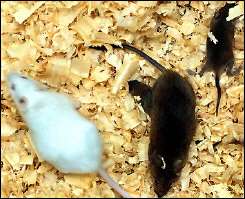
Researchers have used a single compound to increase the lifespan of obese mice, and found that the drug reversed nearly all of the changes in gene expression patterns found in mice on high calorie diets—some of which are associated with diabetes, heart disease, and other significant diseases related to obesity. The research, led by investigators at Harvard Medical School and the National Institute on Aging, is the first time that the small molecule resveratrol has been shown to offer survival benefits in a mammal. The study is reported in the November 1 advanced online edition of Nature.
“Mice are much closer evolutionarily to humans than any previous model organism treated by this molecule, which offers hope that similar impacts might be seen in humans without negative side-effects,” says co-senior author David Sinclair, HMS associate professor of pathology, and co-director of the Paul F. Glenn Labs for the Biological Mechanisms of Aging.
“After six months, resveratrol essentially prevented most of the negative effects of the high calorie diet in mice,” said Rafael de Cabo, Ph.D., the study’s other co-senior investigator from the National Institute on Aging’s Laboratory of Experimental Gerontology, Aging, Metabolism, and Nutrition Unit. “There is a lot of work ahead that will help us better understand resveratrol’s roles and the best applications for it.”
Resveratrol is found in red wines and produced by a variety of plants when put under stress. It was first discovered to have an anti-aging properties by Sinclair, other HMS researchers, and their colleagues in 2003 and reported in Nature. The 2003 study showed that yeast treated with resveratrol lived 60 percent longer. Since 2003, resveratrol has been shown to extend the lifespan of worms and flies by nearly 30 percent, and fish by almost 60 percent. It has also been shown to protect against Huntington’s disease in two different animal models (worms and mice).
“The “healthspan” benefits we saw in the obese mice treated with resveratrol, such as increased insulin sensitivity, decreased glucose levels, healthier heart and liver tissues, are positive clinical indicators and may mean we can stave off in humans age-related diseases such as type 2 diabetes, heart disease, and cancer, but only time and more research will tell,” says Sinclair, who is also a co-founder of Sirtris, a company with an author on this paper and which is currently in a phase 1b trial in humans with diabetes using an enhanced, proprietary formulation of resveratrol. [Harvard has license and equity interests with Sirtris, which is not a public company.]
Investigators identified resveratrol while looking for compounds that activate Sir2, an enzyme linked to lifespan extension in yeast and other lower organisms. For the last 70 years, scientists have been able to increase the lifespan of a variety of species by reducing their normal food consumption by 30 to 40 percent - a diet known as calorie restriction. Through this research, scientists identified Sir2 as a key contributor to life extension. Without Sir2, for example, fruit flies see none of the benefits from either calorie restriction or treatment by resveratrol. The mammalian version of the Sir2 gene is SIRT1, which has the same enzymatic activity as Sir2, but modifies a wider variety of molecules throughout cells. Indicators in this study show that resveratrol might also be activating SIRT1 in mice, as well as other known longevity pathways.
This study examined three groups of mice, one on a standard diet (SD), another on a high calorie diet (HC) with 60 percent of calories coming from fat, and a third group of mice on the same high calorie diet but also treated with resveratrol (HCR). At middle age, or roughly 52 weeks of life, the researchers put the mice on the different diets.
At 60 weeks of age, the survival rates of HC and HCR fed mice groups began to diverge and remained separated by a three to four month span. At 114 weeks of age, 58 percent of the HC fed mice had died, compared to 42 percent of the HCR and SD groups. Presently, the team has found resveratrol to reduce the risk of death from the HC diet by 31 percent, to a point where it is not significantly increased over the SD group. [Note: Given that mice are still living, final calculations can’t be made.] “The median lifespan increase we are seeing is about 15 percent at this point,” says Sinclair. “We won’t have final lifespan numbers until all of the mice pass away, and this particular strain of mouse generally lives for two-and-a-half-years. So we are around five months from having final numbers, but there is no question that we are seeing increased longevity.
The team also found that the HCR fed mice had a much higher quality of life, outperforming the HC fed mice on motor skill tests. “The mice on resveratrol have not been just living longer,” says Sinclair. “They are also living more active, better lives. Their motor skills actually show improvement as they grow older. ”
The research team also wanted to see if resveratrol could reverse the changes in gene expression patterns triggered by high calorie diets. Using liver tissue of five mice at 18 months of age from each group, the team performed a whole-genome microarray and identified which genes were turned on or off. The researchers then used a database generated by the Broad Institute that groups individual genes into common functional pathways to see where there were major differences.
“We made a striking observation,” says Sinclair. “Resveratrol opposed the effects of high caloric intake in 144 out of 153 significantly altered pathways. In terms of gene expression and pathway comparison, the resveratrol fed group was more similar to the standard diet fed group than the high calorie group.”
In humans, high calorie diets can increase glucose and insulin levels leading to diabetes, cardiovascular disease, and non-alcoholic fatty liver disease. In the HC fed mice, researchers found biomarkers that might predict diabetes, including increased levels of insulin, glucose and insulin-like growth factor-1 (IGF-1). Conversely, the HCR fed group had significantly lower levels of these markers, paralleling the SD group. For example, a standard diabetes glucose test on the HCR fed group found considerably higher insulin sensitivity, meaning the HCR group had a lower disposition toward diabetes than the HC fed group. Lower insulin levels also predict increased lifespan in mice.
Three pathologists examined heart tissue from the SD, HC, and HCR mice, and while not knowing which organ belonged to which mouse group, they looked for subtle changes in the abundance of fatty lesions, degeneration and inflammation. On a relative scale of 0-4, the assessment produced mean scores of 1.6 for the SD group, 3.2 for the HC group, and 1.2 for the HCR group.
The researchers also found that the livers of mice at 18 months of age on the HC diet were greatly increased in size and weight. Liver tissue studies of these mice showed a loss of cellular integrity, and a build-up of lipids, which is common to high fat diets. In contrast, the HCR group had normal, healthy livers.
The researchers also looked for metabolic ties to resveratrol’s impact: pathway changes that mimicked those caused by calorie restriction. They examined AMP-activated kinase (AMPK), a metabolic regulator that promotes insulin sensitivity and fatty acid oxidation. It’s been shown in previous work that the lifespan of worms has been extended by the addition of copies the AMPK gene, and chronic activation of AMPK is seen on calorie-restricted diets. The researchers examined the livers of the HCR fed group and found a strong tendency for AMPK activation, as well as two downstream indicators of its activity.
Calorie restriction and exercise have also been previously shown to increase the number of mitochondria in the liver. Mitochondria generate energy in cells. Through electron microscopy, investigators showed that the livers of the HCR fed mice had considerably more mitochondria than the HC group, and were not significantly different from those of the SD group.
The team also asked if SIRT1 was activated by resveratrol in mice, as Sir2 is in lower organisms. To determine this, they looked at the amount of a specific chemical modification (acetylation) on the molecule PGC-1alpha. Removal of the "acetyl" chemical groups on PGC-1alpha activates this protein so that it can turn on certain genes that generate mitochondria and turn muscle into the type suited for endurance. The only enzyme known to remove the acetyl chemical groups on PGC-1alpha is SIRT1, and therefore the activity of PGC-1alpha is one of the most reliable and specific markers of SIRT1 activity in mammals. The research team found that levels of PGC-1alpha were three-fold lower in the HCR fed mice than in the HC mice, consistent with what would be expected when SIRT1 was being activated by resveratrol.
“This work demonstrates that there may be tremendous medical benefits to unlocking the secrets behind the genes that control our longevity,” says Sinclair, “No doubt many more remain to be discovered in coming years."
Source: Harvard Medical School


