Tunguska Event: New Details and Sensational Theory
August 13, 2004
Tunguska event  - an artifact

During the press conference in Krasnoyarsk, Yuri Lavbin, the head of the last expedition, confirmed that parts of an extraterrestrial device had been discovered. The new expedition, organized by the Siberian Public State Foundation “Tunguska Space Phenomenon” completed its work on the scene of Tunguska meteorite fall on August 9.

The first expedition led by Professor Leonid Kulik of the Soviet Academy of Science travelled to the impact site in 1930, only 22 years after the event. However, no evidence of UFO crash was found.

Expeditions sent to the area in the 1950s and 1960s did find microscopic glass spheres in siftings of the soil. Chemical analysis showed that the spheres contained high proportions of nickel and iridium, which are found in high concentrations in meteorites, and indicated that they were of extraterrestrial origin.

Up till now, scientists believed that Tunguska event was caused by the airburst of an asteroid about 5 miles above the surface of the Earth. The asteroid is believed to have been roughly 60 meters across.

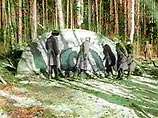
Now, researchers had traced the possible trajectory of the space object, assuming that the object had flown from West to East, unlike the previous missions who considered East to West direction. The new approach allowed the expedition members to find a buried object covered with trees.

The object appeared to be a large block made with metal. The researchers chipped a piece of the object and will now test its composition. Preliminary analyses show that it is a compound of iron silicate with unknown material.

The precise cause of the Tunguska event remains unknown. In scientific circles, the leading explanation for the blast is the impact of a meteorite. A related suggestion is that a meteorite exploded just above the Earth's surface. Whether the meteorite was of cometary or asteroidal origin is still a matter of controversy. Whatever the original cause of the event is, much of the data supports that the cause resembled a nuclear explosion.

In the absence of an obvious explanation, numerous alternative theories have been offered, such as a small black hole passing through the Earth, an impact from a piece of antimatter, and even the catastrophic destruction of a nuclear-powered alien spacecraft. However, there has not been much evidence for these exotic ideas, and simpler theories are available.

The new theory suggests that the event was a collision of a meteorite with an alien spaceship. “They exploded this enormous meteorite that headed towards us with enormous speed,” Yuri Lavbin said. Now this great object that caused the meteorite to explode is found at last. We will continue our research, he said.

Russian researchers plan another large-scale expedition to the Eastern Siberia.

FIND MORE NEWS ON TUNGUSKA EVENT


Rank 3 /5 (20 votes)
Tags

Relevant PhysicsForums posts

More news stories

Clam fields found at deep, low-temperature Mariana vents

(PhysOrg.com) -- Scientists have marveled at the unusual life forms thriving at high temperature hydrothermal vents of the deep ocean.

Space & Earth / Earth Sciences

created 48 minutes ago | popularity not rated yet | comments 0 | with audio podcast

Could Venus be shifting gear?

(PhysOrg.com) -- ESA’s Venus Express spacecraft has discovered that our cloud-covered neighbour spins a little slower than previously measured. Peering through the dense atmosphere in the infrared, the ...

Space & Earth / Space Exploration

created 16 minutes ago | popularity 5 / 5 (1) | comments 0 | with audio podcast

Streams need trees to withstand climate change

(PhysOrg.com) -- More than twenty years of biological monitoring have confirmed the importance of vegetation for protecting Australia's freshwater streams and rivers against the ravages of drought and climate ...

Space & Earth / Environment

created 57 minutes ago | popularity not rated yet | comments 0

The turbulent birth of super star clusters in galaxy mergers

By combining two of the most advanced telescopes in the world -- the new Atacama Large Millimeter Array (ALMA) and the Very Large Telescope (VLT) of ESO -- a team of French astronomers from the Institut d'astrophysique ...

Space & Earth / Astronomy

created 39 minutes ago | popularity not rated yet | comments 0

What does a nebula sound like?

What do things sound like out in the cosmos? Of course, sound waves can’t travel through the vacuum of space; however, electromagnetic waves can. These electromagnetic waves can be recorded by devices called spectrographs ...

Space & Earth / Space Exploration

created 23 minutes ago | popularity 5 / 5 (1) | comments 0


Seeing colors in music, tasting flavors in shapes may happen in life's early months

Famed violinist Itzhak Perlman sees a deep forest green whenever he plays a B-flat on his Stradivarius' G string. The A on the E string is red.

Is that sleepiness during pregnancy normal or a sign of sleep apnea?

(Medical Xpress) -- Most pregnant women complain of being tired. Some of them however, could be suffering more than normal fatigue associated with their pregnancy; they may have developed obstructive sleep apnea (OSA), a ...

Engineering images bring life to submerged city

(PhysOrg.com) -- Photo-realistic 3D mapping and digital reconstruction of an ancient underwater city in Greece have earned a team from the University of Sydney's Faculty of Engineering and Information Technologies ...

Numeracy: The educational gift that keeps on giving?

(Medical Xpress) -- Cancer risks. Investment alternatives. Calories. Numbers are everywhere in daily life, and they figure into all sorts of decisions. A new article published in Current Directions in Psychological Science, a journal of the Association for Psychological Science, examin ...

New power source discovered

(PhysOrg.com) -- Researchers at the Massachusetts Institute of Technology (MIT) and RMIT University have made a breakthrough in energy storage and power generation.

Measurements from high-energy collisions lead to better understanding of why meson particles disappear

For several years, physicists at the Relativistic Heavy Ion Collider (RHIC) at Brookhaven National Laboratory (BNL), USA, have studied an unusual state of matter called the quark–gluon plasma, which they ...