Edible food wrap kills deadly E. coli bacteria
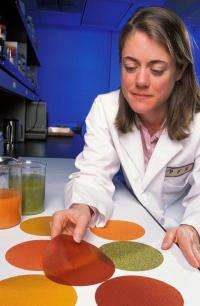
Researchers have improved upon an edible coating for fresh fruits and vegetables by enabling it to kill deadly E. coli bacteria while also providing a flavor-boost to food. Composed of apple puree and oregano oil, which acts as a natural antibacterial agent, the coating shows promise in laboratory studies of becoming a long-lasting, potent alternative to conventional produce washes, according to a team of scientists from the U.S. Department of Agriculture (USDA) and the University of Lleida in Spain.
The study comes on the heels of the recent deadly E. coli outbreak in spinach and amid growing concern by experts that some produce-cleaning techniques may not be effective in destroying E. coli. The study is scheduled for the Nov. 29 issue of the American Chemical Society's Journal of Agricultural and Food Chemistry.
"All produce-cleaning methods help to some degree, but our new coatings and films may provide a more concentrated, longer-lasting method for killing bacteria," says Research Leader Tara H. McHugh, Ph.D., a food chemist with the USDA's Agricultural Research Service in Albany, Calif. As the films are made of fruit or vegetable puree, they also provide added health benefits such as vitamins, minerals and antioxidants, she says.
Researchers have known about the antimicrobial activity of plant-derived essential oils for some time, but McHugh says that her group is the first to incorporate them into a fruit- or vegetable-based edible food wrap for the purpose of improving food safety. Three years ago, she and her associates developed a similar edible food wrap, but without the antimicrobial properties.
The new antimicrobial coatings have not been tested on fresh produce yet, McHugh notes. The current study only tested the coatings against E. coli O157:H7, a potentially deadly strain of the common bacterium Escherichia coli, but tests on other foodborne pathogens, including Salmonella, are ongoing or planned in the future, she says. If they continue to show promise, the coatings could hit the consumer market in a year or two, estimates McHugh, whose study is funded by the USDA.
In developing the coatings, McHugh and her associates tested oregano, cinnamon and lemongrass oils in solutions of apple puree and dried films for their effectiveness against E. coli. Each compound was tested in a controlled series of dilutions, the scientists say.
While all of the oils tested inhibited the growth of E. coli, oregano oil was the most effective, killing over 50 percent of sample bacteria in 3 minutes at concentrations as small as 0.034 percent, says McHugh, who's now working on improving the kill rate.
The second most effective oil was lemongrass, followed by cinnamon oil. By contrast, the apple-puree film alone did not kill the E. coli bacteria, the scientist says.
However, an advantage of the apple antibacterial film is that it is composed of sticky sugars and lipids, which allow the coating to adhere to fruits and vegetables for longer periods than conventional, water-based produce washes. That same stickiness also gives the suspended antimicrobial agents a more concentrated exposure to bacterial surfaces, increasing the film's germ-killing potential, the researchers say.
The antibacterial coating could be used by produce manufacturers as a spray or dip for fresh fruits and vegetables, they say. The resulting product will taste a bit like oregano, McHugh says, adding that this can be a desirable trait in salads.
Besides apple puree, the antimicrobial films can also be made from broccoli, tomato, carrot, mango, peach, pear and a variety of other produce items. Non-antimicrobial versions of these food wraps are now being made commercially by California-based Origami Foods® in cooperation with the USDA for use in a small but growing number of food applications, including sushi wraps.
Source: American Chemical Society


