November 21, 2005 feature
New York tech start-up develops DNA amplifier the size of a paper clip
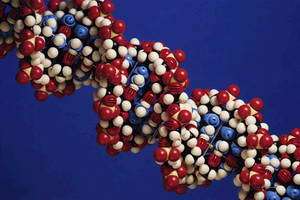
Crime labs and operating rooms that use deoxyribonucleic acid (DNA) testing to prosecute criminals and heal patients could get the job done cheaper and with less equipment if a New York company's first-generation fluidic micro-device gets to the marketplace.
Thermal Gradient, Inc., a company based in the suburbs of Rochester, has made strides with the demonstration of a polymerase chain reaction (PCR) that can be performed much faster and with far less equipment than today's standard DNA process, according to Joel Grover, president and chief executive officer of the company.
Virtually every DNA-based test or experiment requires an amplification step, a biochemical process for replicating large amounts of DNA from a few individual strands - such as those found in a drop of blood.
PCR is the most popular amplification process and is a critical component of the multi-billion dollar biotechnology and clinical diagnostics businesses. Thermal cycling, which exposes the DNA sample to three different temperatures multiple times, is a fundamental element of PCR.
"Present methods for thermal cycling and performing PCR require cumbersome laboratory equipment and can take hours," Grover said.
While other miniature PCR devices exist, they are limited in the rate at which they can change temperature, Grover said. "Our first prototype has demonstrated that we can expose the sample to the required temperatures at unprecedented rates," he said.
The company's first prototype device consists of multiple layers of silicon and other materials. It is about half the size of a standard paperclip and is capable of performing a 30-cycle PCR. It was fabricated at the Infotonics Technology Center in the Finger Lakes region of New York. Infotonics is one of five such state Centers of Excellence and is a collaboration of private enterprise and academia.
Jose Coronas is a partner in Rochester, NY-based The Trillium Group, which has invested in Thermal Gradient.
"Through its continuing partnerships with the Infotonics Technology Center, University of Rochester and Department of Homeland Security, Thermal Gradient intends to refine the technology in devices presently under design to achieve the fastest possible rates for PCR.
The company plans to leverage its patented technology in accelerated thermal cycling through licensing and internally developing devices for clinical diagnostics, general biotechnology, bio-defense and other related industries.
"Our technology will be used to create inexpensive, mass-produced devices that we believe will reduce DNA testing time to just a few minutes and lead to a new generation of automated, DNA-based diagnostic instruments," Grover said. "This demonstration represents a very important first step in achieving that goal."
by Allison Cooper, Copyright 2005 PhysOrg.com


