Evolution revolution
The blue-footed booby, the giant turtle and the horned toad are among several unusual creatures currently on show at The American Museum of Natural History. They form part of new exhibition, running until May 2006, of animals from the Galapagos Islands where Charles Darwin studied wildlife and introduced his contentious theory on evolution.
The blue-footed booby, the giant turtle and the horned toad are among several unusual creatures currently on show at The American Museum of Natural History. They form part of new exhibition, running until May 2006, of animals from the Galapagos Islands where Charles Darwin studied wildlife and introduced his contentious theory on evolution.
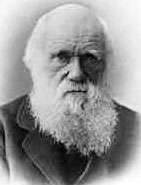
Darwin explored the remote Galapagos Islands from 1831-36. After studying the wildlife in these remote islands, he adopted his theory of evolution and natural selection. According to Darwin, all forms of life evolve according to the mechanism of natural selection. Darwin shocked British scientists and theologians of his era by detailing man's links to simian ancestors. This triggered a long-running debate, giving birth to the rumor that Darwin said, "An American monkey after getting drunk on brandy would never touch it again, and thus is much wiser than most men."
In the early 20th century, Darwin's theory was challenged in the legendary Scopes "Monkey Trial" when a high-school biology teacher in Tennessee was prosecuted for teaching Darwin's revolutionary theory of evolution. Today, Darwin is at the center of a new debate. Two schools of thought are arguing about whether to include the religion-based notion of intelligent design in biology courses alongside the theory of evolution. The exhibition presents and explores these opposing viewpoints.
The exhibitors at the Museum have linked Darwin's prolific writings and experiments with the actual animals and the very fossils that he studied on the Galapagos. The show, open to students of natural history as well as the merely curious, offers many opportunities for hands-on learning. Darwin's magnifying glass is also on display.
The American Museum of Natural History in New York opened the exhibition to chronicle the life of Darwin and his work on Saturday 19 November 2005. It will run until May 29 2006.
Copyright 2005 PhysOrg.com


