A human taste for rarity spells disaster for endangered species
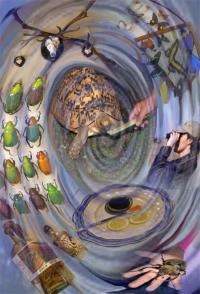
A model shows how the value that humans place on rarity fuels disproportionate exploitation of rare species, rendering them even rarer and thus more desirable, ultimately leading them into a vortex of extinction.
The shady pursuit of endangered bird eggs made international headlines in May 2006 when Colin Watson, widely considered Britain's most notorious illegal egg collector, died after falling from a 12-meter tree, allegedly while hunting a rare egg.
The Royal Society for the Protection of Birds estimates that up to 30 of Britain's most vulnerable species are targeted by collectors. Classical economics theory predicts that such exploitation is unlikely to extinguish a species because the cost of finding the last individuals would outweigh the benefits. But a new theoretical study in PLoS Biology shows that adding human behavior to the equation--specifically, the human penchant for rarity--reveals an unexpected mechanism of exploitation, with alarming implications for species survival.
Franck Courchamp, Elena Angulo, and their colleagues incorporated the assumption that rarity increases a species' value into a classic model of resource exploitation used to manage fisheries. Prizing rarity, they found, triggers a positive feedback loop between exploitation and rarity that drives a species into an extinction vortex.
This phenomenon, the authors explain, resembles an ecological process called the Allee effect, in which individuals of many plant and animal species suffer reduced fitness at low population densities, which increases their extinction risk. The authors' model now shows that humans can trigger an "anthropogenic Allee effect" in rare species through a paradox of value. When rarity acquires value, prices for scarce species can skyrocket, even though continued exploitation will precipitate extinction. And as long as someone will pay any price for the rarest of the rare, market price will cover (and exceed) the cost of harvesting the last giant parrot, tegu lizard, or lady's slipper orchid on Earth.
The authors describe multiple human activities that could precipitate the anthropogenic Allee effect. Hobby collections of the sort Watson allegedly gave his life for top their list. Overhunting for food and feathers pushed the great auk (Pinguinus impennis)--a flightless, now-extinct bird that laid only one egg a year--to the brink of extinction. But it was likely scientists and museum collectors anxious to nab an increasingly rare specimen, the authors suggest, that finished the bird off. And trophy hunting collectors have placed increasing pressure on rare species as their focus has shifted from killing the most dangerous animals to killing the rarest.
The pursuit of social status and health can also trigger the anthropogenic Allee effect, as many rare species are coveted as luxury items--whether for handbags, exotic cuisine, or dining room furniture--or traditional medicines. The exotic pet trade continues to threaten orangutans, monkeys, reptiles, birds, and wild cats, as well as a wide variety of arachnids, insects, and fish. And it appears that pet trade dealers read the scientific literature for clues to the next hot species: immediately after an article recognized the small Indonesian turtle (Chelodina mccordi) and Chinese gecko (Goniurosaurus luii) as rarities, their prices soared. The turtle is now nearly extinct and the gecko can no longer be found in its southeastern China niche. Even well-intentioned activities like ecotourism may destabilize threatened populations.
How to conserve biodiversity when simply declaring a species endangered catalyzes its exploitation? Since many collectors, pet owners, and ecotourists actually care about biodiversity, the authors hope that education may go a long way toward curbing these human activities. Education could even mitigate the damage of trophy hunting and luxury consumption if society stigmatized activities responsible for driving a species to extinction and people could no longer take pride in displaying such "treasures." But for those who prize rarity above all else, only strengthened regulations and interventions will decrease the probability of a coveted species' extinction. And until those protections are firmly in place and enforceable, biologists may do well to think twice before reporting a species' decline.
Source: Public Library of Science


