NASA Unveils Global Exploration Strategy and Lunar Architecture
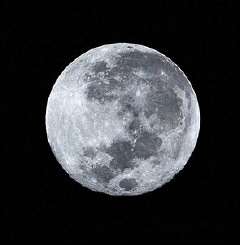
December 4th, 2006 A full moon

NASA on Monday unveiled the initial elements of the Global Exploration Strategy and a proposed U.S. lunar architecture, two critical tools for achieving the nation's vision of returning humans to the moon.

NASA Deputy Administrator Shana Dale, who is guiding the long-term strategy development effort among 14 of the world's space agencies, said, "This strategy will enable interested nations to leverage their capabilities and financial and technical contributions, making optimum use of globally available knowledge and resources to help energize a coordinated effort that will propel us into this new age of discovery and exploration."

The Global Exploration Strategy focuses on two overarching issues: Why we are returning to the moon and what we plan to do when we get there. The strategy includes a comprehensive set of the reasons for embarking upon human and robotic exploration of the moon. NASA's proposed lunar architecture focuses on a third issue: How humans might accomplish the mission of exploring the moon.

In April 2006, NASA initiated development of the Global Exploration Strategy in order to meet a congressional mandate, as well as to accomplish goals outlined in the agency's strategic plan and the Vision for Space Exploration. The strategy is evolving from a lengthy dialogue among more than 1,000 individuals, including experts from NASA and 13 other space agencies, as well as non-governmental organizations and commercial interests. Experts from the Australian, Canadian, Chinese, European, French, German, British, Indian, Italian, Japanese, Russian, South Korean and Ukrainian space agencies participated.

NASA planners used the international group's deliberations as well as input from academia, private sector and private citizens as the basis for sketching a U.S. blueprint for a return to the moon. NASA's Lunar Architecture Team, chartered in May 2006, concluded that the most advantageous approach is to develop a solar-powered lunar base and to locate it near one of the poles of the moon. With such an outpost, NASA can learn to use the moon's natural resources to live off the land, make preparations for a journey to Mars, conduct a wide range of scientific investigations and encourage international participation.

"The architecture work has resulted in an understanding of what is required to implement and enable critical exploration objectives," said Doug Cooke, deputy associate administrator, Exploration Systems Directorate. "This is all important as we continue the process we have begun and better define the architecture and our various exploration roles in what is a very exciting future for the United States and the world."

As currently envisioned, an incremental buildup would begin with four-person crews making several seven-day visits to the moon until their power supplies, rovers and living quarters are operational. The first mission would begin by 2020. These would be followed by 180-day missions to prepare for journeys to Mars.

The proposed lunar architecture calls for robotic precursor missions designed to support the human mission. These precursors include landing site reconnaissance, natural resource assays and technology risk reduction for the human lander.

Moving into 2007, NASA will continue to refine its lunar architecture, maintaining the open dialogue initiated in 2006, to enhance further the Global Exploration Strategy. NASA's goal is to enable a sustainable space exploration effort in which participating organizations can achieve individual goals with mutually beneficial results.

Both the Global Exploration Strategy and NASA's lunar architecture will be discussed in depth at the second Space Exploration Conference, Dec. 4-6, at the George R. Brown Convention Center in Houston.

Source: NASA


print this article email this article download pdf blog this article bookmark this article     Digg this Stumble it share on Facebook share on Reddit add to delicious save to Yahoo! bookmarks
4.6/5 after 7 votes


December 4th, 2006 all stories
Space & Earth / Space Exploration

Comments: 0
Rank: 4.6/5 after 7 votes

  • Stumble this up

  • Digg this

  • Share it:
  • share on Facebook
  • share on MySpace
  • share on Slashdot
  • rss-newsfeed
  • share on Google
  • share on Reddit
  • add to delicious
  • save to Yahoo! bookmarks
  • share on Windows Live
  • Add to Mixx!
Rating: 4.6/5 after 7 votes

  • Related Stories

  • MIT report outlines goals for future of human space program
    created Dec 15, 2008 | popularity not rated yet | comments 0
  • NASA, ESA complete comparative exploration architecture study
    created Jul 09, 2008 | popularity not rated yet | comments 0
  • Intel Introduces New Atom Processors for Mobile Internet Devices
    created Apr 02, 2008 | popularity not rated yet | comments 0
  • International group plans strategy for Mars sample return mission
    created Dec 20, 2007 | popularity not rated yet | comments 0
  • 181 Things To Do On The Moon
    created Feb 05, 2007 | popularity not rated yet | comments 0

Tags


  • Physicists Demonstrate Quantum Memory with Matter Qubits
    Physicists Demonstrate Quantum Memory with Matter Qubits
    Physics / General Physics
    created Jul 03, 2009 | popularity 4.4 / 5 (17) | comments 1
  • 'Holey' Nanosheets for Wastewater Dye Removal
    Nanotechnology / Nanomaterials
    created Jul 01, 2009 | popularity 5 / 5 (5) | comments 1
  • Jellyfish Robot Swims Like its Biological Counterpart
    Jellyfish Robot Swims Like its Biological Counterpart
    Electronics / Robotics
    created Jun 26, 2009 | popularity 4.4 / 5 (8) | comments 1
  • Could Maxwell's Demon Exist in Nanoscale Systems?
    Could Maxwell's Demon Exist in Nanoscale Systems?
    Physics / General Physics
    created Jun 24, 2009 | popularity 4.4 / 5 (18) | comments 29
  • Living Safely with Robots, Beyond Asimov's Laws
    Living Safely with Robots, Beyond Asimov's Laws
    Electronics / Robotics
    created Jun 22, 2009 | popularity 4.6 / 5 (54) | comments 40
  • Other News

    Hurricane Katrina: Phone home

    Space & Earth / Earth Sciences

    created 1hour ago | popularity not rated yet | comments 0

    Though New Orleans residents were told to evacuate days before the arrival of Hurricane Katrina, no one could have predicted the real extent of the devastation.


    Space Station Marathon

    Space Station Marathon

    Space & Earth / Space Exploration

    created 3 hours ago | popularity not rated yet | comments 0

    The International Space Station (ISS) is about to make a remarkable series of flybys over the United States. Beginning this 4th of July weekend, the station will appear once, twice, and sometimes three times ...


    Researchers test new 'space Internet' system on International Space Station

    Researchers test new 'space Internet' system on International Space Station

    Space & Earth / Space Exploration

    created 3 hours ago | popularity 5 / 5 (1) | comments 1

    The University of Colorado at Boulder is working with NASA to develop a new communications technology now being tested on the International Space Station, which will extend Earth's Internet into outer space ...


    World's Largest Ocean Observatory Nears Completion

    Space & Earth / Earth Sciences

    created 1hour ago | popularity not rated yet | comments 0

    Canada is about to take the world on a 25-year non-stop research expedition—into the deep ocean.


    California to require sun-blocking car windows

    Space & Earth / Environment

    created 8 hours ago | popularity 2 / 5 (4) | comments 10

    New cars sold in California must include windshields that block or absorb the sun's rays beginning in 2012, the state's Air Resources Board recently ruled.