Bush's space plan said in danger
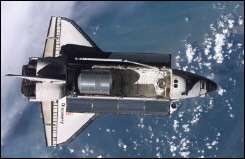
November 24, 2005 The shuttle Discovery

A large deficit in NASA's troubled shuttle program threatens President Bush's space exploration plan, it was reported Thursday.

The deficit could seriously delay or cripple the ambitious program unless the number of planned flights is cut virtually in half or the White House agrees to add billions of dollars to the U.S. space flight budget, the Washington Post said.

Sources familiar with ongoing negotiations between NASA and the White House say the administration has no intention of spending extra money to deal with a shortfall. Some space experts say the deficit could exceed $6 billion from 2006 to 2010 when NASA plans to retire the space shuttle for good.

The cornerstones of the Bush initiative, announced in a speech on Jan. 14, 2004, are to use the shuttle to finish the international space station by 2010, develop the crew exploration vehicle by 2014, return humans to the moon by 2020 and eventually travel to Mars.

Copyright 2005 by United Press International


print this article email this article download pdf blog this article bookmark this article     Stumble it Digg this share on Facebook retweet share on Reddit add to delicious
Rate this story - 2.8 /5 (6 votes)

Rank Filter

Move the slider to adjust rank threshold, so that you can hide some of the comments.


Display comments: newest first

  • knobface - Jul 30, 2009
    • Rank: not rated yet
    wtf seriusly ... yeh thort we have "supposidly" been to the moon.... smells fishy to me .... y do we need to wait 10 years hahahhaha thats proposterous !

November 24, 2005 all stories

Comments: 1

2.8 /5 (6 votes)
  • Stumble this up

  • Digg this

  • share this

  • hide
  • Related Stories

  • Space flight panel can't fit lunar mission into NASA budget
    created Aug 16, 2009 | popularity not rated yet | comments 0
  • NASA eyes water in Moon mission
    created May 21, 2009 | popularity not rated yet | comments 0
  • NASA Outlines FY 2006 Operating Plan
    created Feb 14, 2006 | popularity not rated yet | comments 0
  • CAGW: Moon, Mars Missions Not A Priority For Taxpayers
    created Jun 17, 2005 | popularity not rated yet | comments 0
  • Astronaut's baby daughter born as he circles Earth
    created 7 hours ago | popularity not rated yet | comments 0


Other News

The shore of Deception Island in Antarctica, in 2008

Antarctic ice loss vaster, faster than thought: study

Space & Earth / Earth Sciences

created 7 hours ago | popularity 2.9 / 5 (10) | comments 8

The East Antarctic icesheet, once seen as largely unaffected by global warming, has lost billions of tonnes of ice since 2006 and could boost sea levels in the future, according to a new study.


Astronaut's baby daughter born as he circles Earth (AP)

Astronaut's baby daughter born as he circles Earth

Space & Earth / Space Exploration

created 7 hours ago | popularity 5 / 5 (1) | comments 0

(AP) -- Astronaut Randolph Bresnik jubilantly welcomed his new daughter into the world Sunday as he floated 220 miles above it.


Denmark: 65 world leaders for UN climate summit (AP)

Denmark: 65 world leaders for UN climate summit

Space & Earth / Environment

created 7 hours ago | popularity 1 / 5 (2) | comments 2

(AP) -- Sixty-five world leaders have said they will attend the Copenhagen climate summit in December, and several more have responded positively to invitations, Danish officials said Sunday.


Commuters wait on the platform shrouded by fog in London

Climate change not man-made, say majority of Britons: poll

Space & Earth / Environment

created Nov 15, 2009 | popularity 3.4 / 5 (16) | comments 46

Less than half of Britons believes that human activity is to blame for global warming, according to a poll carried out for The Times newspaper and published on Saturday.


Mysteriously warm times in Antarctica

Mysteriously warm times in Antarctica

Space & Earth / Earth Sciences

created Nov 18, 2009 | popularity 4.2 / 5 (21) | comments 31

(PhysOrg.com) -- A new study of Antarctica's past climate reveals that temperatures during the warm periods between ice ages (interglacials) may have been higher than previously thought. The latest analysis ...