Midges send undeniable message -- Planet is warming
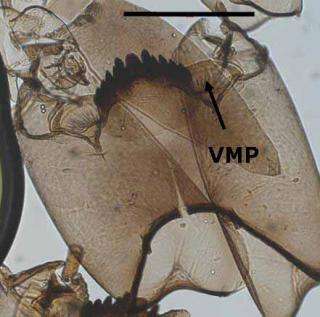
Small insects that inhabit some of the most remote parts of the United States are sending a strong message about climate change. New research suggests that changes in midge communities in some of these areas provide additional evidence that the globe is indeed getting warmer.
Researchers created a history of changing midge communities for six remote mountain lakes in the western United States. Midges, which resemble mosquitoes but usually don't bite, can live nearly anywhere in the world where there is fresh water.
The insect remains revealed a dramatic shift in the types of midges inhabiting these lakes in the last three decades, said David Porinchu, the study's lead author and an assistant professor of geography at Ohio State University.
"Climate change has had an overriding influence on the composition of the midge communities within these lakes," he said. "The data suggest that the rate of warming seen in the last two decades is greater than any other time in the previous century."
The data suggest that, starting around 25 years ago, warmer-water midges began to edge out cooler-water midge species around these remote lakes.
"People would like to believe that these mountainous environments may be immune to climate change, but these are some of the first areas to feel the impact of warmer temperatures," Porinchu said.
He and his colleagues presented their findings December 15 in San Francisco at the annual meeting of the American Geophysical Union.
The researchers gathered sediment from six small lakes in the Great Basin of the western United States – a vast watershed bounded roughly by the Sierra Nevada and Rocky Mountain ranges. Since the lakes are accessible only by foot trail, the researchers carried in an inflatable raft during the summer months in order to collect sediment samples from the middle of the lakes. The lakes range from 8.2 feet (2.5 meters) to 34.5 feet (10.5 meters) deep.
The scientists collected sediment in cylindrical plastic tubes, gathering several samples from each lake. They didn't need much sediment – just four inches (10 cm) of lake-bottom residue can represent nearly 100 years' worth of sedimentation, Porinchu said.
"The amount of sediment that trickles out of the water column to the bottom of these lakes every year is so low because these lakes are at such high elevations – few, if any, trees grow at these elevations," he said. "There just isn't much material entering the lakes."
Once they were back in the laboratory, the researchers sliced the sediment cores into thin slivers about 0.2 inches (0.5 cm) thick. Each sliver represents a five or 10-year span, Porinchu said. They calculated the age of single sediment layers by using lead-210, an isotope of lead that decays at a constant rate and, therefore, can serve as a chronological aid.
Using a microscope, the researchers then searched the sediment for larval remains of the midges. Specifically, they were looking for larval head capsules, which are made of a hard, semi-transparent material called chitin. These head capsules become embedded in sediment once they are shed. Chitin, also a component of insect exoskeletons and the shells of crustaceans, doesn't readily degrade in the sediment of these lakes.
The researchers determined the type of midges that lived in the lakes based on specific variations in certain head capsule structures, such as differences in the number, size, shape and orientation of teeth.
"In the upper layers of most of the sediment samples – those representing the last 25 to 30 years – we see head capsules from midges that normally thrive in slightly warmer water temperatures," Porinchu said. "And the cooler-water midges have nearly, or completely, disappeared."
Surface water temperatures in these lakes have risen anywhere from 0.5 to 1 degree since the 1980s.
"Although that doesn't seem to be a huge increase, just a slight fluctuation in water temperatures can significantly affect the rate of egg and larval development," Porinchu said.
And the majority of midge species living in these six lakes in the last 30 years thrive in temperatures ranging from 58.8 to 60 degrees F (14.9 to 15.6C), while cooler-water midges prefer temperatures in the 57 to 58.1F (13.9 to 14.5C) range.
"Above-average surface water temperatures typified the late 20th century in all of the lakes that we studied," Porinchu said. "It's clearly an indication that something is happening that is already affecting aquatic ecosystems in these fragile, high-elevation lakes."
Source: Ohio State University


