Glaciers Adding More To Global Sea Rise Than Ice Sheets, Study Says
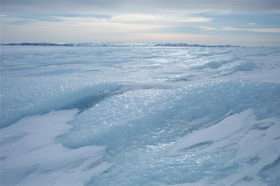
Despite growing public alarm over the shrinking Greenland and Antarctic ice sheets, it is small glaciers and ice caps that have been contributing the most to rising sea levels in recent years, according to a new University of Colorado at Boulder study.
More than half of the estimated 650 billion tons of ice lost to the oceans annually comes from the discharge of small glaciers and icecaps, said Professor Tad Pfeffer of CU-Boulder's Institute of Arctic and Alpine Research. Such ice masses are estimated to be shedding 400 billion tons of ice -- nearly equal to the volume of Lake Erie -- compared to the Greenland and Antarctic ice sheets, which combined are estimated to be contributing about 250 billion tons annually, according to the analysis.
Earth's sea level currently is rising at about 3 millimeters per year and could rise by several feet or more by the end of the century if warming on Earth continues, according to recent studies. Most scientists believe rising temperatures are primarily the result of a continuing build-up of greenhouse gases in the atmosphere.
"The message from our study is that small glaciers and ice caps are the biggest sources of water in global sea rise, which runs contrary to many news reports focusing on Antarctica and Greenland," said Pfeffer, an INSTAAR fellow and professor in the civil, environmental and architectural engineering department. "We feel that ignoring the contributions of small glaciers and icecaps is dangerous because it affects the accuracy of predictions of sea rise around the world."
Pfeffer made a presentation on disappearing glacial ice at the Fall Meeting of the American Geophysical Union held in San Francisco Dec. 11 to Dec. 15. Other CU researchers involved in the study from INSTAAR, the geological sciences department and the geography department are Emeritus Professor Mark Meier, Professor Mark Dyurgerov, Professor Robert Anderson, Professor Suzanne Anderson, postdoctoral researcher Shad O'Neel and doctoral student Ursula Rick.
Meier estimated there are several hundred thousand small glaciers and small, pancake-shaped ice masses known as ice caps spread around the world in polar and temperate regions, which because of their numbers are extremely difficult to map and monitor individually. They range from modest, high mountain glaciers found on every continent to huge glaciers like the Bering Glacier in Alaska, the largest glacier in continental North America, which measures about 5,000 square miles and is nearly one-half mile thick in places.
Because of the challenge in inventorying each individual glacier, the researchers used a mathematical "scaling" process to estimate and characterize more remote glacier volumes, thicknesses and trends by factoring in data like altitude, climate and geography, said Meier. The team used data gathered from around the world, including cold regions in Russia, Northern Europe, China, India, Nepal and South America.
The analysis by the CU-Boulder team includes tidewater glaciers like the Columbia Glacier, one of 51 Alaskan glaciers that empty into the ocean. A 2005 study by Pfeffer, Meier and colleagues showed the Columbia Glacier -- the largest glacial contributor to sea level in North America - had shrunk by 9 miles since 1980 and was discharging two cubic miles of ice into Prince William Sound annually.
"We expect that small glaciers will be the biggest contributors to global sea rise for the next 50 to 100 years," said Meier. Continued warming temperatures will likely cause most of the glaciers in the Rocky Mountains and Alps, for example, to disappear by the end of the century, Meier said.
Pfeffer said he hopes policy makers pay attention to studies calculating the large contributions to sea rise from small glaciers and ice caps. "I don't think we can afford to wait until there is two feet of water in our livings rooms to start thinking about a response to changing climate," he said. The study was funded by the National Science Foundation's Arctic Natural Sciences Program.
In addition to sea rise contributions, increasingly large discharges of fresh water into the oceans from glaciers and ice caps also may be having ecological impacts in coastal regions, including coastal Alaska, Pfeffer said. These include changes in ocean salinity and temperature, the transport nutrients from land into to marine ecosystems and altered environments for both terrestrial and marine animal species.
Source: University of Colorado at Boulder


