Mars rocks could provide vital clue to how life began on Earth
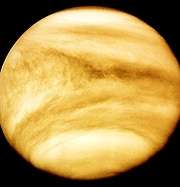
December 12, 2006 Mars

Studying rocks on Mars, which are among the oldest rocks in the Solar System, could provide scientists with key evidence of how the earliest forms of life arose on Earth, say researchers writing in this month’s edition of Origins of Life and Evolution of Biospheres.

Life on Earth was preceded by a period of chemical evolution during which inanimate organic matter was assembled into living systems. Unfortunately, no evidence of this period of evolution remains on Earth, as there are no rocks left on the planet old enough to have recorded trace evidence of the chemical events billions of years ago. This is because Earth is a geologically active planet, and any such ancient rocks have been consumed and recycled by the rock cycle.

However, there are still rocks on Mars today which have been there for 4.5 billion years, since both Earth and Mars were formed. Dr Randall Perry from Imperial College London's Department of Earth Science and Engineering suggests that these rocks may have preserved within them evidence of how chemicals evolved during the transition from pre-life to life. If present, this evidence would not only shed vital new light on how life came into existence on Earth, but could also prove that similar simple life forms were arising on Mars at the same time.

Dr Perry explains: "The kind of evidence I think might be found in these ancient Martian rocks would be traces of primordial polymers or some remnants of the failed chemistry of reproduction. It would be fascinating to use rocks from Mars to find out more about the complex and little-understood chemical process whereby matter on Earth evolved into what we would recognise as primitive forms of life.

"What's more, there is always the chance that Martian rocks may reveal more than just traces of ancient chemical changes: the opportunity might arise to find evidence of early forms of life on Mars which took a different evolutionary path to those on Earth."

Citation: Randall S. Perry and William K. Hartman, "Mars primordial crust: Unique sites for investigating proto-biologic properties," Origin of Life and Evolution of Biospheres. Published online 28 November 2006.

Source: Imperial College London


print this article email this article download pdf blog this article bookmark this article     Stumble it Digg this share on Facebook retweet share on Reddit add to delicious
Rate this story - 3.4 /5 (14 votes)


December 12, 2006 all stories

Comments: 0

3.4 /5 (14 votes)
  • Stumble this up

  • Digg this

  • share this

  • hide
  • Related Stories

  • Spacesuits with artificial intelligence may look for life on Mars
    created Nov 04, 2009 | popularity not rated yet | comments 0
  • A Mars Rover Named 'Curiosity'
    created Oct 30, 2009 | popularity not rated yet | comments 0
  • Seeking Life's Shadow
    created Oct 01, 2009 | popularity not rated yet | comments 0
  • The violent youth of solar proxies steer course of genesis of life
    created Aug 10, 2009 | popularity not rated yet | comments 0
  • Evidence for ocean on Enceladus: Tiny Saturn Moon Could Be Targeted in Search for Extraterrestrial Life
    created Jul 22, 2009 | popularity not rated yet | comments 0


  • hide
  • Relevant PhysicsForums posts

Other News

Close-up movie shows hidden details in the birth of super-suns

Close-up movie shows hidden details in the birth of super-suns (w/ Video)

Space & Earth / Astronomy

created 11 hours ago | popularity 4.8 / 5 (5) | comments 0

(PhysOrg.com) -- The constellation of Orion is a hotbed of massive star formation, most prominently in the Great Nebula that sits in Orion's sword. The glowing gas of the Nebula is powered by a group of young ...


Ghostly 'Spokes' Puff Out From Saturn's Ring's

Ghostly 'Spokes' Puff Out From Saturn's Ring's (w/ Video)

Space & Earth / Space Exploration

created 7 hours ago | popularity 5 / 5 (1) | comments 0

(PhysOrg.com) -- Massive, bright clouds of tiny ice particles hover above the darkened rings of Saturn in an image captured by the Cassini spacecraft on Sept. 22, 2009, around the time of Saturn's equinox. ...


NASA 'Drops' Next Generation Robotic Lander During Autonomous Tests

NASA 'Drops' Next Generation Robotic Lander During Autonomous Tests

Space & Earth / Space Exploration

created 8 hours ago | popularity 4.7 / 5 (3) | comments 1

(PhysOrg.com) -- NASA has successfully completed a series of autonomous "drop" tests of a robotic lander test article - in a record 10 months - to demonstrate the ability to perform a controlled landing on ...


Volatile gas could turn Rwandan lake into a freshwater time bomb

Space & Earth / Earth Sciences

created 9 hours ago | popularity 4.5 / 5 (4) | comments 3

A dangerous level of carbon dioxide and methane gas haunts Lake Kivu, the freshwater lake system bordering Rwanda and the Republic of Congo.


Space shuttle Atlantis lifts off on supply mission (AP)

Space shuttle Atlantis lifts off on supply mission

Space & Earth / Space Exploration

created 7 hours ago | popularity 3.5 / 5 (2) | comments 0

(AP) -- With 100 Internet-savvy NASA fans cheering on the shuttle and churning out constant Twitter updates, Atlantis sailed smoothly into orbit Monday with six astronauts and a full load of spare parts for ...