Plant a tree and save the Earth?
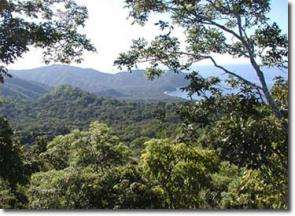
Can planting a tree stop the sea level from rising, the ice caps from melting and hurricanes from intensifying?
A new study says that it depends on where the trees are planted. It cautions that new forests in mid- to high-latitude locations could actually create a net warming. It also confirms the notion that planting more trees in tropical rainforests could help slow global warming worldwide.
In the first study to investigate the combined climate and carbon-cycle effects of large-scale deforestation in a fully interactive three-dimensional climate-carbon model, scientists from Lawrence Livermore National Laboratory, Carnegie Institution and Université Montpellier II found that global forests actually produce a net warming of the planet.
The study provides a holistic view of the deforestation issue. “This is the first comprehensive assessment of the deforestation problem” said Govindasamy Bala, lead author of the research that will be presented on Dec. 15 at the American Geophysical Society annual meeting in San Francisco.
The models calculated the carbon/climate interactions and took into account the physical climate effect and the partitioning of the carbon dioxide release from deforestation among land, atmosphere and ocean.
Forests affect climate in three different ways: they absorb the greenhouse gas carbon dioxide from the atmosphere and help to keep the planet cool; they evaporate water to the atmosphere and increase cloudiness, which also helps keep the planet cool; and they are dark and absorb a lot of sunlight, warming the Earth. Climate change mitigation strategies that promote planting trees have taken only the first effect into account.
“Our study shows that tropical forests are very beneficial to the climate because they take up carbon and increase cloudiness, which in turn helps cool the planet” Bala said.
But the study concludes that, by the year 2100, forests in mid- and high-latitudes will make some places up to 10 degrees Fahrenheit warmer than would have occurred if the forests did not exist.
“The darkening of the surface by new forest canopies in the high latitude Boreal regions allows absorption of more sunlight that helps to warm the surface. In fact, planting more trees in high latitudes could be counterproductive from a climate perspective,” Bala said.
The study finds little or no climate benefit when trees are planted in temperate regions.
“Our integrated systems approach allowed us for the first time to estimate the total effects of land cover change in different regions of the world,” Bala said.
Afforestation has been promoted heavily in mid-latitudes as a means of mitigating climate change. However, the combined carbon/climate modeling study shows that it doesn't work. The albedo effect (the process by which less sunlight is reflected and more is absorbed by forest canopies, heating the surface) cancels out the positive effects from the trees taking in carbon.
“Our study shows that preserving and restoring forests is likely to be climatically ineffective as an approach to slow global warming,” said Ken Caldeira, a co-author of the study from the Carnegie Institution. “To prevent climate change, we need to transform our energy system. It is only by transforming our energy system and preserving natural habitat, such as forests, that we can maintain a healthy environment. To prevent climate change, we must focus on effective strategies and not just ‘feel-good’ strategies.”
Source: Lawrence Livermore National Laboratory


