Nanomaterials vulnerable to dispersal in natural environment
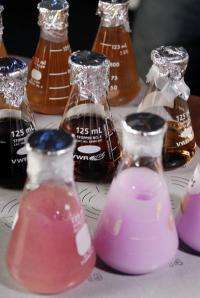
Laboratory experiments with a type of nanomaterial that has great promise for industrial use show significant potential for dispersal in aquatic environments -- especially when natural organic materials are present.
When mixed with natural organic matter in water from the Suwannee River -- a relatively unpolluted waterway that originates in southern Georgia -- multiwalled carbon nanotubes (MWNTs) remain suspended for more than a month, making them more likely to be transported in the environment, according to research led by the Georgia Institute of Technology.
Carbon nanotubes, which can be single- or multiwalled, are cylindrical carbon structures with novel properties that make them potentially useful in a wide variety of applications including electronics, composites, optics and pharmaceuticals.
"We found that natural organic matter, or NOM as we call it, was efficient at suspending the nanotubes in water," said Jaehong Kim, an assistant professor in the Georgia Tech School of Civil and Environmental Engineering.
The research will be published in the January issue of the American Chemical Society journal Environmental Science & Technology. Kim is the senior author and conducted the research with Professor Joseph Hughes, graduate student Hoon Hyung, both at Georgia Tech, and postdoctoral researcher John Fortner from Georgia Tech and Rice University.
"We don't know for certain why NOM is so efficient at suspending these nanotubes in the laboratory," Kim said. "We think NOM has some chemical characteristics that promote adhesion to the nanotubes more than to some surfactants. We are now studying this further."
In the lab, Kim and his colleagues compared the interactions of various concentrations of MWNTs with different aqueous environments organic-free water, water containing a 1 percent solution of the surfactant sodium dodecyl sulfate (SDS), water containing a commercially available sample of Suwannee River NOM and an actual sample of Suwannee River water from the same location as the commercially available preparation. They agitated each sample for one hour and then let it sit for up to one month.
The researchers then used transmission electron microscopy (TEM), measurements of opacity and turbidity, and other analyses to determine the behavior of MWNTs in these environments. The results were:
-- MWNTs added to organic-free water settled quickly, and the water became completely transparent in less than an hour.
-- When added to the SDS solution, the nanotubes immediately made the water dark and cloudy. After one day of settling, some nanotubes remained suspended, and the water was a light gray color.
-- Water containing the commercially available sample of Suwannee River NOM originally appeared dark and cloudy, then gradually lightened after four days of settling. Some MWNTs remained suspended for more than a month.
-- The results with an actual Suwannee River sample were similar to those with the commercially available preparation.
In addition, Kim and his colleagues used TEM to find that most MWNTs in both samples of NOM were suspended as individually dispersed nanotubes, rather than being clustered together as some other nanomaterials do in water. "This individual dispersion might make them more likely to be transported in a natural environment," Kim explained.
In light of these findings, Kim and his colleagues have expanded their research to other nanomaterials, including single-walled carbon nanotubes and C60, the so-called "buckyball" molecules in the same family as carbon nanotubes. They are also experimenting with other NOM sources and studying different mixing conditions. "We are getting some interesting results, though our findings are still preliminary," Kim noted.
While researchers explore applications of nanomaterials and industry nears commercial manufacture of these novel products, it's essential for scientists and engineers to study the materials' potential environmental impact, Kim added.
"Natural organic matter is heterogeneous," he explained. "It's a complex mixture made from plants and microorganisms, and it's largely undefined and variable depending on the source. So we have to continue to study nanomaterial transport in the lab using various NOM sources to try to better understand their potential interaction in the natural environment."
In related research, Kim's research team is studying various other aspects of the fate of nanomaterials in water -- including photochemical and chemical reactions of C60 colloidal aggregates -- with the ultimate goal of understanding the environmental implications of nanotechnology.
Source: Georgia Institute of Technology Research News


