Durable critters providing insight for human egg preservation
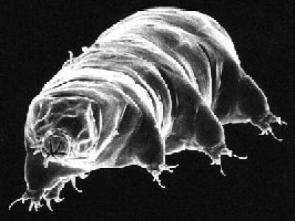
A tiny, six-legged critter that suspends all biological activity when the going gets tough may hold answers to a better way to cryopreserve human eggs, researchers say.
Tardigrades, also called water bears, can survive Himalayan heights or ocean depths as long as they have moisture.
When they don’t, they produce a sugar, trehalose, slowly dehydrate and essentially cease functioning until the rain comes, says Dr. Ali Eroglu, reproductive biologist and cryobiologist at the Medical College of Georgia.
Tardigrades are not alone in their amazing ability to outlast adverse conditions. A type of brine shrimp, often called a sea monkey, comes back to life with water. The Baker’s yeast Dr. Eroglu uses when he bakes bread with his children does as well. Similarly arctic wood frogs use the sugar, glucose, to tolerate frigid temperatures until the summer thaw.
While humans don’t naturally produce trehalose, researchers think they can use it to safely preserve human eggs – and those of endangered species – giving better options to young women facing cancer therapies that may leave them infertile and others who simply want to delay reproduction.
"Our hypothesis is when we introduce sugars into cells and into oocytes, we can protect them against freezing-associated stresses," says Dr. Eroglu, who received a $1.2 million grant from the National Institute of Child Health and Human Development to continue pursuing his hypothesis. "We also hypothesized if we used trehalose, we also could use conventional cryoprotectants, which can be toxic, in lower concentrations to minimize their toxicity while maximizing overall protection."
Pilot data show it works like a charm, at least in mouse eggs. Researchers injected eggs with trehalose, cooled them to liquid nitrogen temperature, thawed them and exposed them to sperm. They got healthy babies at a similar rate to unfrozen controls.
"We were very excited," says Dr. Eroglu, whose work has prompted desperate calls from young cancer patients wanting to preserve their eggs. "We got very good development rates, then we transferred the embryos to foster mothers and got pups that were completely healthy." In fact, those pups had healthy pups. His limited testing in human eggs indicates they also can be preserved and thawed safely using this approach, however further research is needed to pursue clinical applications.
The NIH grant enables him to use monkey eggs, which are similar to human eggs, to find the optimal mix of sugar, conventional cryprotectants and freezing to maximize egg preservation. Collaborators at Emory University are providing the eggs and at the Georgia Institute of Technology are developing a mathematical model to predict cooling rates while avoiding destructive intracellular ice formation. Dr. Eroglu also is working with the MCG Section of Reproductive Endocrinology, Infertility and Genetics In vitro Fertilization Program to obtain discarded eggs that failed to fertilize.
Dr. Eroglu looks for a better way because current approaches are fraught with problems. Scientists have been freezing human eggs for about two decades but not very successfully. "Embryo cryopreservation is relatively successful, but to freeze oocytes, we have to overcome many hurdles," he says. A major problem is the protective, exterior jelly coat of an egg doesn’t freeze well. The jelly coat protects the egg from mechanical stress and serves as a receptor for sperm. Sperm must pass through the coat then penetrate the interior plasma membrane. As soon as a single sperm penetrates, it triggers intracellular signaling that transforms the coat into a hard, impermeable structure and with good reason: if multiple sperm penetrate, chromosomal abnormalities result. Interestingly, traditional freezing, even with cryopreservatives, can cause these problems and more. The jelly coat hardens, making it impossible for sperm to get through the traditional way. "You don’t have this issue with an embryo because fertilization already has occurred," Dr. Eroglu says.
Intracytoplasmic sperm injection came into use in 1997 to help overcome the hardened jelly coat but other problems persist. Chemical stress, freezing or warming can disrupt the egg’s mechanism for dividing chromosomes – babies get half their chromosomes from mom and half from dad – so they don’t line up as they should. In addition to hardening the jelly coat, cold stress can change intracellular signaling resulting from sperm penetration. Lipids or fats in the egg can fuse and the membrane can become leaky.
The bottom line is only about 1-5 percent of eggs develop to term after standard cryopreservation techniques, which include a combination of slow freezing in conjunction with low levels of cryoprotectants such as dimethyl sulfoxide, or rapid freezing with more cryoprotectants.
Dr. Eroglu says the sugars, which help protect the natural structure of proteins, enable use of warmer temperatures and fewer cryoprotectants. He uses the tried and true intracytoplasmic sperm injection approach to deliver sugar – instead of sperm - to eggs before cooling. One of his ultimate goals is to design sugars that can easily penetrate the egg’s membrane, but at least for now, tardigrade sugars seems to work just fine in mice.
One of his many hopes is that freezing embryos won’t always be necessary, whether it’s a human or an endangered species. Rather, eggs and sperm – which have been frozen successfully for decades – can be kept apart until fertilization is desirable. This could preclude the controversy of destroying unused embryos and perhaps the debate over embryonic stem cells, he says.
Eggs, which can reprogram cell function by turning genes off and on, can produce cells that can become essentially anything, Dr. Eroglu says. If he can better understand how they do this, regular body cells might be reprogrammed in a test tube to embryonic-like stem cells for therapeutic use.
Source: Medical College of Georgia


