New study demonstrates economic value of invasive species screening programs
A new study by a team that includes David Lodge, a professor of biology and director of the Center for Aquatic Conservation at the University of Notre Dame, contends that screening programs for invasive species can not only be effective in stopping the spread of such species, but also can produce economic benefits.
In a paper to be published in this week’s editions of the Proceedings of the National Academies of Sciences, lead author Reuben Keller, a biologist and Notre Dame fellow, Lodge, and David Finnoff, an economist at the University of Wyoming, examine the Australian plant quarantine program.
“To reduce damage from nonindigenous species, some countries have implemented species screening to limit the introduction of damaging species,” Lodge said. “However, these programs have often been viewed as pitting environmental policy against economic growth. The concern was that risk assessment technologies would exclude many noninvasive species, which provide a net economic benefit, for every invasive species correctly identified.”
Lodge, Keller and Finnoff analyzed the Australian plant quarantine program and found that it produces net economic benefits. The risk assessment technology used by Australia has an accuracy of nearly 90 percent.
“Because we use low estimates of the financial damages caused by invasive species and high estimates of the value of species in the ornamental plant trade, our results underestimate the net value benefit of the Australian plant quarantine program,” Lodge said.
“In addition, because plants have relatively low rates of invasion, applying screening protocols to animals would likely demonstrate even greater benefits.”
The paper’s publication comes in the midst of a policy debate over whether the United States should adopt a screening program for nonindigenous species. The U. S. Department of Agriculture is currently considering instituting such a program.
Lodge also is the lead author of a recently released Ecological Society of America (ESA) paper titled “Biological Invasions: Recommendations for U.S. Policy and Management,” that calls for a stronger government response to the problem of invasive species.
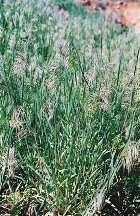
The paper warns that harmful non-native species — from combustible cheat grass to voracious carp to West Nile virus — are spreading into U.S. lands and waters at an accelerating pace. Absent a new improved national strategy based on science, these invasive species will cause increasing damage to the nation’s natural and economic resources.
Lodge and the ESA paper’s other authors stress that when it comes to invasive species, prevention, of the sort they examine in the PNAS paper, is the best policy. Once harmful species become widespread, management options are limited and expensive.
In yet another paper currently in press, Lodge suggests that analyzing the reproductive rate of snail and clam species would be an effective means of deciding if they will represent an environmental or economic danger.
“Basically, the more fecund a species is, the more damage they potentially represent,” he said.
The paper also suggests combining this information with an assessment of where the species would thrive.
A fourth forthcoming paper adopts this approach by examining the Chinese mitten crab, a harmful species that has traveled to areas such as the San Francisco Bay through ship traffic and found an environment to thrive in. It also has recently appeared in the Chesapeake Bay area.
According to Lodge the four recent papers suggest that the United States needs to move from it current “no policy” on importing invasive species to a more cost-effective preventative strategy.
“Thus far, the nation simply bears the cost,” he said. “We’re recommending a much more cost-effective system of prevention, early detection, and rapid response — before the damages are irreversible.”
Source: University of Notre Dame


