Complexity constrains evolution of human brain genes
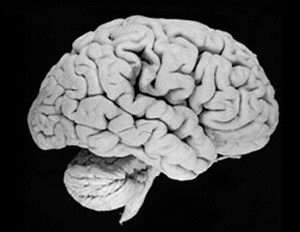
Despite the explosive growth in size and complexity of the human brain, the pace of evolutionary change among the thousands of genes expressed in brain tissue has actually slowed since the split, millions of years ago, between human and chimpanzee, an international research team reports in the December 26, 2006, issue of the journal, PLOS Biology.
The rapid advance of the human brain, the authors maintain, has not been driven by evolution of protein sequences. The higher complexity of the biochemical network in the brain, they suspect, with multiple gene-gene interactions, places strong constraints on the ability of most brain-related genes to change.
"We found that genes expressed in the human brain have in fact slowed down in their evolution, contrary to some earlier reports," says study author Chung-I Wu, professor of ecology and evolution at the University of Chicago. "The more complex the brain, it seems, the more difficult it becomes for brain genes to change. Calibrated against the genomic average, brain-expressed genes in humans appear to have evolved more slowly than in chimpanzee or old-world monkey."
Humans have an exceptionally big brain relative to their body size. Although humans weigh about 20 percent more than chimpanzees, our closest relative, the human brain weighs 250 percent more. How such a massive morphological change occurred over a relatively short evolutionary time has long puzzled biologists.
Previous reports have argued that the genes that regulate brain development and function evolved much more rapidly in humans than in nonhuman primates and other mammals because of natural selection processes unique to the human lineage.
The comparative pace of organ-specific evolution, however, turns out to be difficult to measure. To assess the speed with which both humans and chimpanzees accumulated many small differences in gene sequences accurately, Wu and colleagues in Taiwan and Japan decided to sequence several thousand genes expressed in the brain of the macaque monkey and compare them with available genomic sequences from human, chimpanzee, and mice.
What they found was that the "more advanced" species had faster overall rates of evolution. So, on average, the genes from humans and chimpanzees changed faster than genes from monkeys, which changed faster than those from mice.
They explained the trend as a correlate of smaller population size in the more advanced species. Species with smaller population size can more easily escape the harsh scrutiny of natural selection.
When they compared the pace of evolution among genes expressed in the brain, however, the order was reversed. When calibrated against the genomic average, brain genes in humans evolved more slowly than in other primates, which were slower than mice.
"We would expect positive selection to work most effectively on tissue-specific genes, where there would be fewer conflicting requirements," says Wu. "For example, genes expressed only in male reproductive tissues have evolved very rapidly."
Brains, however, "are intriguing in this respect," Wu says. Genes that are expressed only in the brain evolved more slowly than those that are expressed in the brain as well as other tissues, and those genes evolved more slowly than genes expressed throughout the rest of the organism.
The authors attribute the slowdown to mounting complexity of interactions within the brain. "We know that proteins with more interacting partners evolve more slowly," Wu said. "Mutations that disrupt existing interactions aren't tolerated."
Although the gene sequences from human and chimpanzee remain very similar, previous studies in tissues other than the brain have shown that gene expression varies widely. Other studies have found that, within the brain, the abundance of expressed genes per neuron appears to be greater in humans.
"On the basis of individual neurons of the brain, humans may indeed have a far more active, or even more complex, transcription profile than chimpanzee," the authors note. "We suggest that such abundant and complex transcription may increase gene-gene interactions and constrains coding-sequence evolution."
Future studies of brain function and evolution will increasingly take advantage of the approaches of systems biology, Wu suggested. "The slowdown in genetic evolution in the more advanced organs makes sense," he said, "only when one takes a systems perspective."
Source: University of Chicago


