Men and women differ in brain use during same tasks
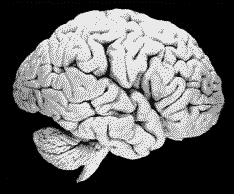
The comedians are right. The science proves it. A man's brain and a woman's brain really do work differently. New research from the University of Alberta shows that men and women utilize different parts of their brains while they perform the same tasks. The results of the research are reported this month in the journal NeuroImage.
The study involved volunteers who performed memory tasks, verbal tasks, visual spatial tasks and simple motor tasks while their brain activity was monitored with functional Magnetic Resonance Imaging (fMRI) technology.
"The results jumped out at us," said Emily Bell, a U of A PhD student in psychiatry and lead author of the paper "Sometimes males and females would perform the same tasks and show different brain activation, and sometimes they would perform different tasks and show the same brain activation."
"It is widely recognized that there are differences between males and females, but finding that different regions of the brain are activated in men and women in response to the same task has large potential implications for a variety of different clinical situations," said Dr. Peter Silverstone, a psychiatrist at the U of A and an author of the study.
Silverstone cited the psychiatric condition of major depression as an example of the psychological differences between men and women, because twice as many women as men have this condition. He added that there are many other psychiatric conditions in which the male and female ratio is not equal or in which males and females show different symptoms and different profiles for the same conditions.
Thirty-three healthy, right-handed volunteers (23 male and 10 female) were used in the study. The researchers say this a relatively small sample, but Silverstone believes his group's latest findings suggest that future psychiatric research and clinical treatments for men and women should involve gender specific focuses to ensure that the sexes are studied separately, which he believes has not been done before.
"The larger implications of this work, as well as other work pointing in the same direction, is that we may increasingly find out that there are differences in the 'hard wiring' of male and female brains."
"We'd like to push forward in this area," added Bell, a Killam scholar at the U of A. "It hasn't been seen yet how this information can be used to help patients, but more work in this area may lead to that."
Source: University of Alberta


