New research says winning a Nobel Prize adds nearly 2 years to your lifespan
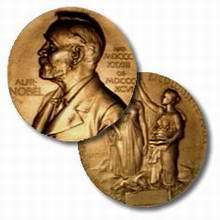
New research by the University of Warwick reveals that a Nobel Prize brings more than just cash and kudos - it can also add nearly two years to your life.
The research by Professor Andrew Oswald, an economist at the University of Warwick, and Matthew Rablen, (a former Warwick postgraduate researcher now a government economist), is published this month in a study entitled "Mortality and Immortality".
The researchers carried out their study in order to try to answer a long-standing question for economists and medical researchers as to whether social status alone can affect people's well being and lifespan. Although the existence of some kind of effect is known from studies of monkey packs, in humans it has been difficult up till now to separate any perceived positive effect of "status" from the effect of simple greater wealth that status often brings. Nobel Prize winners were viewed as an ideal group to study as the winners could be seen as having their status suddenly dropped on them. They also come with a ready made control group they can be directly measured against - scientists who were nominated for a Nobel prize but did not actually win one.
The researchers looked at winners and nominees in physics and chemistry between 1901 and 1950 (the full list of nominees are kept secret for 50 years). This gave them 528 male scientists with known biographical details (birth and death dates). They looked at one sex only to avoid differences in life span between sexes. They dropped four from that total who died prematurely for non biological reasons - such as active combat in the First World War. That left 524 scientists, of whom 135 actually won a Nobel Prize.
The average life span for this group was just over 76 years. Winners of the Nobel Prize were found to live 1.4 years longer on average (77.2 years) than those who had "merely" been nominated for a prize (who lived on average for 75.8 years). When the survey was restricted to only comparing winners and nominees from the same country, the longevity gap widened even more by around another two thirds of a year on average.
Professor Oswald said: "Status seems to work a kind of health-giving magic. Once we do the statistical corrections, walking across that platform in Stockholm apparently adds about 2 years to a scientist's life-span. How status does this, we just don't know."
The researchers also looked at the Nobel Prize fund - the real value of which has changed over time. By comparing the possible effects of that variation, they found that the amount of actual prize money won by Nobel prize winners had no effect on their longevity - suggesting that it is the sheer status boost of the award that is important in extending lifespan.
The researchers also looked to see if the number of nominations for a Nobel Prize had any effect as a number of the scientists in the survey had been nominated for the award several times. They found that the number had no effect- actually winning the Nobel Prize was what counted.
Source: University of Warwick


