Biologists 'trick' viruses into extinction
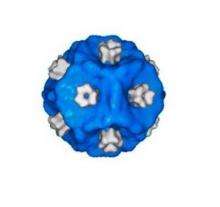
February 12, 2007 Cartoon Image of phi-6 Procapsid

Cartoon image of phi-6 procapsid. Credit: Dennis Bamford / University of Helsinki

While human changes to the environment cause conservation biologists to worry about species extinction, Yale biologists are reversing the logic by trying to trap viruses in habitats that force their extinction, according to a report in Ecology Letters.

To avoid going extinct a population must not only survive, but also reproduce. Paul Turner, associate professor of ecology and evolutionary biology at Yale, tested the practicality of luring a virus population into the wrong cells within the human body, thus preventing virus reproduction and alleviating disease.

"Ecological traps for viruses might arise naturally, or could be engineered by adding viral binding sites to cells that disallow virus reproduction," said senior author Turner. "We proved the concept using a non-human virus, and variants of the bacteria cells it infects."

In ecology, a habitat that supports population growth is termed a "source," whereas a non-supportive habitat is a "sink." This study reported on the success of phi-6 virus populations in environments containing different mixtures of ordinary "source" bacteria and mutant trap cells that act as "sinks."

Their research showed that when the number of trap cells exceeded a key threshold in the mixtures, the virus population could no longer sustain itself and declined toward extinction.

"This approach has intriguing potential for new treatments against human viruses," said Turner. "A similar idea already exists in agriculture, where farmers use non-harvested 'trap crops' to lure insect pests. Because the pests prefer the taste of the trap crops, only these plants need to be sprayed, reducing the amount of pesticide use."

Turner believes that similar trickery might be used against human viruses like HIV. He notes that HIV recognizes the T-cells it infects by CD4 molecules on the cell surface, but it then requires functions of the cell nucleus to reproduce. Current anti-HIV therapies are designed to maintain high T-cell counts in the human body, so that the immune system can properly function. But, these drugs therapies are very expensive.

Turner suggests, "A cheaper option is the possibility of engineering trap cells that have CD4 molecules on their surface, but no nucleus for virus reproduction. Mature red blood cells could fill the bill, because they lack a nucleus and could be engineered as sink habitats that greatly outnumber the T-cell source habitats in the body."

Source: Yale University


print this article email this article download pdf blog this article bookmark this article     Stumble it Digg this share on Facebook retweet share on Reddit add to delicious
Rate this story - 4.5 /5 (11 votes)


February 12, 2007 all stories

Comments: 0

4.5 /5 (11 votes)
  • Stumble this up

  • Digg this

  • share this

  • hide
  • Related Stories

  • Jet-propelled Imaging for an Ultrafast Light Source
    created Aug 04, 2009 | popularity not rated yet | comments 0
  • Jet-propelled imaging for an ultrafast light source
    created Jul 29, 2009 | popularity not rated yet | comments 0
  • 'Femtomolar Optical Tweezers' May Enable Sensitive Blood Tests
    created Nov 13, 2008 | popularity not rated yet | comments 0
  • Researchers develop method to rapidly ID optimal drug cocktails
    created Mar 17, 2008 | popularity not rated yet | comments 0
  • Why circumcision reduces HIV risk
    created 22 hours ago | popularity not rated yet | comments 0


Other News

Asian carp may have breached barrier protecting Lake Michigan

Biology / Ecology

created 6 hours ago | popularity 5 / 5 (3) | comments 0

Two feared species of Asian carp have zoomed beyond the $9 million electric barriers built to keep them out of Lake Michigan. Now, the only thing left between the carp and the Great Lakes is a lock and dam in southern Chicago.


Got a pain? -- Have a cup of Brazilian mint

Biology / Plants & Animals

created 8 hours ago | popularity 4.6 / 5 (7) | comments 0

For thousands of years it has been prescribed by traditional healers in Brazil to treat a range of ailments from headaches and stomach pain to fever and flu.


Opposites attract: Monkeys choose mating partners with different genes

Biology / Evolution

created 8 hours ago | popularity 5 / 5 (1) | comments 0

The world's largest species of monkey 'chooses' mates with genes that are different from their own to guarantee healthy and strong offspring, according to a new research study.


When is a stem cell really a stem cell?

When is a stem cell really a stem cell?

Biology / Biotechnology

created 9 hours ago | popularity 4.7 / 5 (3) | comments 0

(PhysOrg.com) -- Induced pluripotent stem (iPS) cells -- adult cells reprogrammed to look and function like versatile embryonic stem cells -- are of growing interest in medicine. They may provide a way to ...


Ice Cold: Cooler Than Being Cool

Ice Cold: Cooler Than Being Cool

Biology / Cell & Microbiology

created 10 hours ago | popularity 4.2 / 5 (9) | comments 0

(PhysOrg.com) -- Water expands when it freezes. Anyone who has ever left a can of soda or bottle of water in the freezer too long has witnessed this first hand. So how do plants and animals survive severe ...