Grizzly bears feast on diverse diet
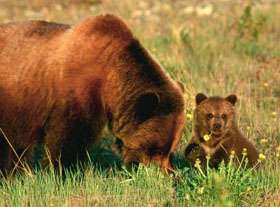
There’s no such thing as picky grizzly bears—they’ll eat almost anything they can find. A new University of Alberta study that tracked food habits of the Alberta grizzly bear living in the foothills sheds some light on the animal’s varied diet and their activity pattern.
“Alberta bears have remarkably diverse diets,” said Dr. Mark Boyce, biological sciences professor at the U of A and co-author on the study. “They’ll eat just about anything.”
Ants, fruits, moose and plants are a few staples of the Alberta grizzly bear’s diet. This new research study was the most comprehensive examination of grizzly bear foods ever conducted in Canada. Using global positioning system (GPS) radiotelemetry technology and analyzing 665 feces collected from 18 grizzly bears over a period of three years, the scientists found that the bears packed a lot of activity into 24 hours. The research was recently published in the “Journal of Mammalogy.”
Much is known about what bears in mountainous areas eat but little is known of the diets of grizzly bears living in boreal forests also used by humans. As well, this new research looked at five different activities the bears use to find food—whether it feeds on flowers, insects, fruits, digs for plants or kills other animals, specifically ungulates.
The diverse diets of the Alberta grizzly bear helps cushion them against climate change and other vagaries of the environment, said Boyce. Specifically, the research team found that the bears living in the foothills are effective predators on moose and deer. They are especially good at killing moose calves during the difficult spring period when other foods like berries are not yet available, said Boyce. Mountain bears are largely vegetarian, by comparison.
The scientists identified 40 different food items, examining each for seasonal patterns of use and differences among mountain and foothills environments. Digging the root of sweet vetch plants dominated early spring diets, while preying on ungulates—or hooved animals--was greatest during late spring, although the timing varied between foothill and mountain bears. Moose were the most common ungulate eaten by the bear (83 per cent), especially newborns (54 per cent), with white-tailed and mule deer (16 per cent) and elk (1 per cent) more minor in comparison. Rodents, insects (primarily ants), and birds were also consumed. Green vegetation dominated early summer diets and as fruit ripened in early August, berries such as soopolallie and mountain huckleberry were added to the bears’ menu. The scientists also learned that most of the activity of the east slopes bears takes place in the daytime, especially morning and the evening. This is in contrast to bears living in spots where more frequent contact with humans take place, such as Banff National Park where most bear activity has become nocturnal.
Although the bears are filling up on these different food sources, being so near to highways and roads is dangerous for the animals.
“Bears are eating substantial amounts of clover and alfalfa, which are common roadside plantings,” said Boyce. “Because these roadside plantings are attractive to bears, this can put the bears at risk of contact with humans. Nearly all new roads being constructed in the province are built by industry, either for timber harvest or oil and gas development.
“We should encourage industry to avoid using such attractive food items when planting in ditches and roadsides. It would be much better to use native grasses and other native plants to stabilize road banks and ditches. Most bear deaths occur near roads and we want to avoid attracting bears to areas near roads.”
Source: University of Alberta


