IMEC reports robust technology to functionalize nanoparticles for biomedical applications
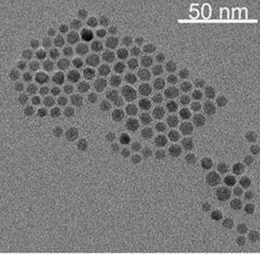
IMEC, an independent Belgian research center, developed a generic and versatile method to synthesize stable, biocompatible magnetic nanoparticles. By tuning the endgroups, the functionalized nanoparticles can be used for a wide variety of biomedical applications, such as accurate drug delivery, improved diagnostics and targeted cancer therapy.
The interest for using functionalized magnetic nanoparticles for biomedical and bioengineering applications is rapidly increasing. They can be widely used for in-vitro as well as in-vivo applications such as magnetic biosensing, cell separation, contrast enhancement in magnetic resonance imaging, tissue repair, hyperthermia treatment and accurate drug delivery. To apply magnetic nanoparticles in these fields, the size, shape and (bio)chemical coating of the particles need to be accurately controlled, the thermal and chemical stability needs to be retained and the magnetization values must be high.
IMEC realized a first ever reported robust technology for functionalized magnetic nanoparticles meeting the stringent biomedical characteristics by using a hydrophobic surfactant to passivate the surface. To make them compatible with biological environments, the nanoparticles are made water-soluble. The latter is done by a novel self-assembly procedure in which the hydrophobic surface ligands are replaced by silanes bearing a choice of three different endgroups (amino, carboxylic acid or poly(ethylene glycol)). As a result, the magnetic nanoparticles achieve highly stable and water-dispersible properties. The silane molecules even form a protective layer against mild acid and alkaline environments. The possibility to use three different endgroups makes the nanoparticles suitable to interact with various biological particles such as proteins, DNA or cells.
IMEC will be investigating if the functionalized magnetic nanoparticles can enhance the contrast of magnetic resonance imaging by magnetically tagging cells after bringing functionalized magnetic nanoparticles in the blood stream. IMEC also researches the use of the nanoparticles for cancer diagnostic and hyperthermia treatment. In this technique, a changing magnetic field is sent through the tagged cancer cells, which overheats the cell and thus allows localized treatment of the cancer tumor. Furthermore IMEC currently investigates, in collaboration with the VIB department of Molecular and Developmental Genetics at KULeuven, the possibilities to apply these nanoparticles as purification agents in cellular proteomics.
"Biomedical electronics is one of the fastest growing markets. Technologies for biomedical electronics are developed at the crossroads of microelectronics, nanotechnology and biotechnology and therefore form an interesting research domain for IMEC;" said Gustaaf Borghs, IMEC fellow. "By complementing our basic expertise in micro- and nanoelectronic engineering with expertise in the fields of medicine, chemistry and biology, IMEC is rapidly becoming an interesting partner for the medical and pharmaceutical industry."
Source: IMEC


