In Iran, cheetahs collared for the first time
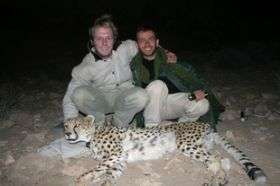
An international team of scientists led by the Wildlife Conservation Society working in Iran has successfully fitted two Asiatic cheetahs with Global Positioning System (GPS) collars, marking the first time this highly endangered population of big cats can be tracked by conservationists.
Once found throughout the continent, Asiatic cheetahs now live only in extremely arid habitat on the edges of Iran's Kavir Desert. WCS's government partner in Iran, the Department of Environment/CACP project estimates their remaining numbers between 60 and 100 animals, making the Asiatic cheetah one of the most imperiled cats on earth.
The two male cheetahs were captured in the Bafgh Protected Area, Yazd Province, in the south-west area of the central Iranian plateau, where they were tranquilized, and fitted with compact GPS collars weighing 350 grams- only 1% of the cheetahs' weight. It is the first time the species has been handled by a scientific team in Iran and represents a unique new phase of WCS's long-term involvement in the country. The new collars will furnish very precise information on the routes that cheetahs use to travel between protected areas, and will reveal the key features in the landscapes that are critical to their survival. .
"This is an amazing milestone in securing the long-term future for the Asiatic cheetah," said Wildlife Conservation Society biologist Dr. Luke Hunter, who led the international team. "We know very little about the important ecological needs of the species in Iran except that they require vast areas for their survival. Understanding their movements as they travel between reserves is one of the first steps in establishing a plan to secure and connect the few remaining populations of this incredible animal."
Once ranging from the Red Sea to India, the Asiatic cheetah today is hanging on by only the thinnest of threads. In the 1970s, estimates of the number of cheetahs in Iran ranged from 100 to 400 animals. But widespread poaching of cheetahs and their prey during the early years of the 1979 revolution, along with degradation of habitat due to livestock grazing, have pushed this important predator to the brink of extinction. Historically cheetahs have played a significant role in Iranian culture, being trained by its emperors to hunt gazelles in ancient times.
Iranian biologist and director of the project in Iran, Dr Hooshang Ziaie said "These captures herald a new era of conservation in Iran. This is the first time we have successfully deployed these collars in Iran, and the data they provide will enable us to make very specific recommendations for conserving cheetahs for future generations. We are delighted that this international collaboration is producing such important outcomes."
Source: Wildlife Conservation Society


