Scientists discover new marine species in eastern Pacific
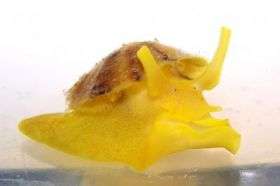
Smithsonian scientists have discovered a biodiversity bounty in the Eastern Pacific—approximately 50 percent of the organisms found in some groups are new to science. The research team spent 11 days in the Eastern Pacific, a unique, understudied region off the coast of Panama.
Coordinated by Rachel Collin of the Smithsonian Tropical Research Institute, a team of Smithsonian scientists and international collaborators with expertise in snails, crabs, shrimp, worms, jellies and sea cucumbers participated in an intensive effort to discover organisms from this ecosystem.
Although they expected to find new species, Collin was surprised by the sheer number of novel marine organisms. "It's hard to imagine, while snorkeling around a tropical island that's only a three-hour flight from the United States, that half the animals you see are unknown to science," Collin said.
"Overwhelming diversity," said Jon Norenburg, an expert in ribbon worms from the Smithsonian's National Museum of Natural History. More than 50 percent of the ribbon worms he collected have never been seen before. Norenburg studies ribbon worms ranging from those so tiny they live between grains of sand to 6-foot-long specimens that eat entire crabs and sea hares.
During the expedition, Norenburg discovered new species of ribbon worms that live and reproduce among crab eggs. These worms can be important pests of commercial species, but they are often overlooked because they are smaller than the eggs themselves. "All the tedious dissections and microscope preparations done on a rolling, vibrating ship have really paid off," Norenburg said.
One of the unique features of the islands off the coast of Panama is that they host animals that normally are found in the Indo-Pacific, half a world away. "To think that the larvae of Hymenocera picta, a little shrimp we collected on Isla Seca, can survive a journey of more than 3,000 miles from the Indo-Pacific to the coast of Panama is mind blowing!" said Darryl Felder from the University of Louisiana. Felder will use samples collected on this expedition as part of the crustacean Tree of Life, a project funded by the National Science Foundation, which aims to determine the relationships among all families of crabs and shrimps. Even soft corals, a relatively well-studied group, yielded 15 new species over 3 years in a complimentary project organized by STRI Staff Scientist Hector Guzman.
The scientists hope their data will be useful for ANAM (Panama's environmental agency) and to STRI's Juan Mate, who leads the effort to develop an innovative management plan for Coiba National Park, a UNESCO World Heritage site.
What species live here? How much of this biota remains unknown to science? What are the relationships to other world regions? The results of this collection trip will be published in the scientific literature during the next several years, as taxonomists classify each organism.
This adventure is far from over. The STRI team is ideally positioned to thoroughly sample the entire fauna, not just the corals and fishes. Since most studies of the Eastern Pacific date back 100 years, it is vital to obtain current data from the area.
Source: Smithsonian Tropical Research Institute


