Biologists Develop Large Gene Dataset for Rice Plant
March 13, 2007 Biologists Develop Large Gene Dataset for Rice Plant

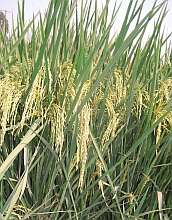
Plant biologists have reported a new understanding of how genes work in rice. Credit: Fangming Xie, IRRI

Scientists have reported development of a large dataset of gene sequences in rice. The information will lead to an increased understanding of how genes work in rice, an essential food for much of the world's population.

Plant biologist Blake Meyers at the University of Delaware and colleagues report their results in the March 11 on-line issue of the journal Nature Biotechnology.

Using advanced gene sequencing technologies and high-powered computer-based approaches, Meyers and colleagues examined both normal gene expression (via messenger ribonucleic acids, or mRNAs) as well as small ribonucleic acids (small RNAs) in rice.

The analysis of rice was based on gene sequences representing nearly 47 million mRNA molecules and three million small RNAs, a larger dataset than has been reported for any other plant species.

Small RNAs are considered one of most important discoveries in biotechnology in the last 10 years. Because they are so much smaller than mRNAs, small RNAs went unnoticed for many years, or were considered biologically unimportant, said Meyers.

Small RNAs are now known to play an important role in gene regulation, he said, adding that deficiencies in small RNA production can have a profound effect on development.

"Small RNAs also have been associated with other important biological processes, such as responses to stress," Meyers said. "Many of small RNAs in rice have related sequences in the many important cereal crop plants, including maize and wheat."

Research on small RNAs "is a leading edge in plant biotechnology," said Machi Dilworth, Director of the National Science Foundation (NSF)'s Division of Biological Infrastructure, which along with the U.S. Department of Agriculture, funded the research. "This work will contribute to an understanding of the role of small RNAs in gene expression not only in rice, but in all plants."

Source: NSF


print this article email this article download pdf blog this article bookmark this article     Stumble it Digg this share on Facebook retweet share on Reddit add to delicious
Rate this story - 4.5 /5 (2 votes)


March 13, 2007 all stories

Comments: 0

4.5 /5 (2 votes)
  • Stumble this up

  • Digg this

  • share this

  • hide
  • Related Stories

  • Using novel tool, researchers dig through cell 'trash' and find treasure
    created Sep 19, 2008 | popularity not rated yet | comments 0
  • Researchers discover novel 'gene toggles' in world's top food crop
    created Apr 09, 2008 | popularity not rated yet | comments 0
  • Less can be more, for plant breeders too
    created Mar 19, 2008 | popularity not rated yet | comments 0
  • Algorithm finds the network -- for genes or the Internet
    created Mar 12, 2008 | popularity not rated yet | comments 0
  • Researchers design a tool to induce controlled suicide in human cells
    created Dec 17, 2009 | popularity not rated yet | comments 0


Other News

Citrus

Citrus surprise: Vitamin C boosts the reprogramming of adult cells into stem cells

Biology / Cell & Microbiology

created Dec 24, 2009 | popularity 4.8 / 5 (26) | comments 3

Famous for its antioxidant properties and role in tissue repair, vitamin C is touted as beneficial for illnesses ranging from the common cold to cancer and perhaps even for slowing the aging process. Now, ...


The sun sets behind the Manhattan skyline on December 11 in New York

New Yorkers beware! New cockroach hits the Big Apple

Biology / Evolution

created Dec 24, 2009 | popularity 4.3 / 5 (14) | comments 3

New Yorkers are used to fighting each other for space, but there may be a new contender in town according to a Rockefeller study that appears to have uncovered a new species of cockroach.


Ladder-walking locusts show big brains aren't always best

Ladder-walking locusts show big brains aren't always best

Biology / Plants & Animals

created Dec 24, 2009 | popularity 5 / 5 (6) | comments 1

Scientists have shown for the first time that insects, like mammals, use vision rather than touch to find footholds. They made the discovery thanks to high-speed video cameras - technology the BBC uses to ...


Scientists show that plants have measure of the shortest day

Biology / Plants & Animals

created Dec 23, 2009 | popularity 5 / 5 (2) | comments 1

(PhysOrg.com) -- It is not only people who feel the effects of short winter days - new research by the University of Edinburgh and the University of Warwick has shed light on how plants calculate their own winter solstice. ...


Hot Water Treatment Eliminates Rhizoctonia from Azalea Cuttings

Hot Water Treatment Eliminates Rhizoctonia from Azalea Cuttings

Biology / Ecology

created Dec 24, 2009 | popularity 5 / 5 (2) | comments 0

(PhysOrg.com) -- Rhizoctonia, a fungal disease that can be found in many ornamental plants, can be eliminated in azalea by placing plant cuttings in a hot water treatment, an Agricultural Research Service (ARS) ...