When it comes to risk, not all nanomaterials are created equal
The size, type, and dispersion of nanomaterials could all play a role in how these materials impact human health and the environment, according to two groups of researchers at Rensselaer Polytechnic Institute. In new studies, the teams found that while carbon nanotubes inhibited growth in mammalian cells, they sustained the growth of commonly occurring bacteria.
The seemingly contradictory findings highlight the need for society to better grasp the impacts these infinitesimally small particles could have when released into the environment or the human body, the researchers said. Both results were presented at the 233rd American Chemical Society (ACS) National Meeting in Chicago, March 25-29, 2007.
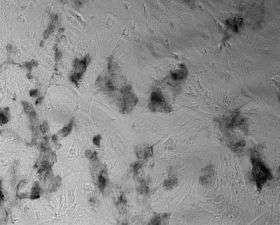
In the first study, which was led by Assistant Professor of Biomedical Engineering Deanna M. Thompson, researchers examined the impact of carbon nanotubes on the growth of rat heart muscle cells to better understand how they affect mammalian cells — and ultimately human tissue and organs. Unlike previous research that focused on the effects of nanotube clusters on cell growth, this study looked at both the impacts of clusters and related finely dispersed material composed of small bundles of nanotubes and other nanoparticulate impurities.
The researchers discovered that the finely dispersed material, despite its low concentration, inhibited animal cell growth more than larger clusters of nanotubes. Activated carbon, a commonly used nanoporous carbon material, had a lower impact on the cells than either the large aggregates or the finely dispersed material. The findings of this study were recently published in the journal Toxicology Letters.
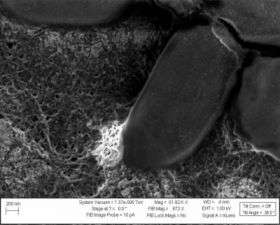
In the second study, which was led by Anurag Sharma, assistant professor of earth and environmental sciences, researchers monitored bacterial growth in the presence of carbon nanotubes to help better understand how the introduction of nanoscale materials might impact the environment over an extended period of time. Escherichia coli (E. coli), a commonly occurring bacterium in nature, was used as the model bacterial species.
The study revealed that while the nanotubes sustained bacterial growth, they also promoted considerable elongation of the E. coli in some instances. This finding indicates that the nanotubes may have induced a stress-related impact on the biological activity of the bacteria. This elongation was not observed with other carbon nanomaterials such as activated carbon or C60 fullerenes, which are commonly referred to as “buckyballs.”
“It appears that in order to see a real environmental impact of nanomaterials, a significantly long duration study similar to ours is needed to get further insight into the physiology of biological interactions in general, and bacterial interactions in particular,” said Pavan Raja a doctoral candidate in chemical and biological engineering who worked on both research teams.
Taken together, the two studies suggest that different nanomaterials and associated parameters could have widely different impacts on human health and the environment. “These findings highlight the underlying need for further research to correlate in detail the different types of nanomaterials and their modes of interaction with biological systems, to promote safe and optimized applications of nanotechnology,” said Raja.
For the first study, Raja worked under Thompson’s leadership along with several other Rensselaer researchers: senior biomedical engineering student Jennifer Connolley; research engineer Gopal P. Ganesan; postdoctoral research associate Lijie Ci, Professor and former Vice President of Research Omkaram Nalamasu; and Pulickel M. Ajayan, the Henry Burlage Professor of Materials Science and Engineering
For the second study, Raja worked with Ganesan under the lead of Sharma, Nalamasu, and Ajayan.
Source: Rensselaer Polytechnic Institute


