Scientists find that lightning is good indicator of volcanic activity
March 29, 2007 Scientists find that lightning is good indicator of volcanic activity

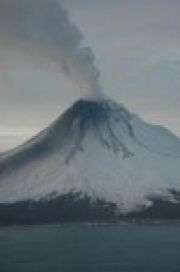
Following the initial eruptions of Alaska's Mount Augustine Jan. 11 and 13, 2006, scientists found that lightning was produced and two electromagnetic lightning detectors were set up about 60 miles away in Homer. Credit: Image courtesy of the Alaska Volcano Observatory

Although it's been more than a year since Mount Augustine had its memorable eruption, work continues for University of Alaska Fairbanks researchers. The work of Alaska Volcano Observatory employees from UAF's Geophysical Institute will be appearing in the upcoming issue of the journal Science.

The article, which came out on Feb. 23, documents electrical activity that occurred during the January 2006 eruption of Mount Augustine. While it has long been known that volcanic eruptions can produce vigorous lightning, there are few direct observations of the phenomena, states the article.

Following the initial eruptions of Jan. 11 and 13, 2006, two of which produced lightning, two electromagnetic lightning detectors were set up in Homer about 60 miles from Augustine. A couple of days later, the volcano erupted again, with the first of four eruptions producing a "spectacular lightning sequence."

The conclusions, according to Volcano Seismologist Steve McNutt, who is a research professor of geophysics at UAF and co-author of the article, is that in addition to the current means that seismologists employ in determining volcanic eruptions. As a result of this research, plans are under way to install a simple lightning detector on Mount Cleveland this summer.

Source: University of Alaska Fairbanks


print this article email this article download pdf blog this article bookmark this article     Stumble it Digg this share on Facebook retweet share on Reddit add to delicious
Rate this story - 4 /5 (14 votes)


March 29, 2007 all stories

Comments: 0

4 /5 (14 votes)
  • Stumble this up

  • Digg this

  • share this

  • hide
  • Related Stories


  • hide
  • Relevant PhysicsForums posts

  • The IPCC and the term "most"
    created 1hour ago
  • Is global warming a fact?
    created 3 hours ago
  • Random variability of wind patterns
    created 17 hours ago
  • Record precipitation in the UK
    created 21 hours ago
  • More from Physics Forums - Earth

Other News

Spitzer Telescope Observes Baby Brown Dwarf

Spitzer Telescope Observes Baby Brown Dwarf

Space & Earth / Astronomy

created 32 minutes ago | popularity 5 / 5 (2) | comments 0

(PhysOrg.com) -- NASA's Spitzer Space Telescope has contributed to the discovery of the youngest brown dwarf ever observed -- a finding that, if confirmed, may solve an astronomical mystery about how these ...


Free Spirit: Third Extrication Drive Ends With Wheel Stall

Free Spirit: Third Extrication Drive Ends With Wheel Stall

Space & Earth / Space Exploration

created 8 minutes ago | popularity not rated yet | comments 0

(PhysOrg.com) -- Spirit experienced a wheel stall with the right-rear wheel during the second step of a two-step drive on Sol 2092 (Saturday, Nov. 21). This is not the same wheel that stalled on Sol 1899 (May ...


3 Questions: Sara Seager on searching for Earth-like planets

3 Questions: Sara Seager on searching for Earth-like planets

Space & Earth / Astronomy

created 8 minutes ago | popularity not rated yet | comments 0

(PhysOrg.com) -- MIT planetary scientist Sara Seager has been studying exoplanets — planets circling stars other than the sun — for many years.


The Crab Nebula: A Cosmic Icon

The Crab Nebula: Energy for 100,000 Suns

Space & Earth / Astronomy

created 48 minutes ago | popularity 5 / 5 (2) | comments 0

(PhysOrg.com) -- A star's spectacular death in the constellation Taurus was observed on Earth as the supernova of 1054 A.D.


New computer-developed map shows more extensive valley network on Mars

New computer-developed map shows more extensive valley network on Mars

Space & Earth / Space Exploration

created 1hour ago | popularity 4 / 5 (1) | comments 0

New research adds to the growing body of evidence suggesting the Red Planet once had an ocean.