Detecting poisons in nectar is an odour-ous task for honeybees
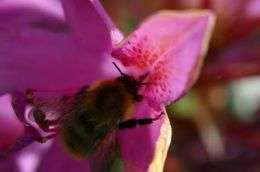
Though many spring flowers have bright advertisements offering sweet rewards to honeybees, some common flowers have not-so-sweet or even toxic nectars. Why plants would try to poison the honeybees they wish to attract is a scientific mystery. The honeybee, which accounts for the pollination of at least 1/3 of the world’s crop plants, may encounter such poisoned nectar in common crop and garden plants such as Rhododendrons and almond trees.
Can honeybees learn whether nectar contains toxins, and does this influence their ability as pollinators? Dr Geraldine Wright (Newcastle University) will present data on how toxins in nectar affect a honeybee’s willingness to eat floral nectar on Sunday 1st April at the Society for Experimental Biology’s Annual Meeting in Glasgow.
Honeybees are very clever and can learn to associate almost any colour, shape, texture or scent with food. The newly-sequenced honeybee genome has revealed that honeybees do not have as many genes for taste receptors as other animals of a similar size, such as flies and mosquitoes. This prompted scientists to think that perhaps honeybees had a reduced need to detect and learn about toxins, despite the fact that some floral nectar contains toxins. Work carried out by Dr Wright and colleagues suggests that honeybees may have the ability to react to toxins, even if they cannot taste them.
Researchers found that both the sugar content and the toxins in nectar affected a honeybee’s memory for learned odours. Honeybees learned not to respond to odours associated with toxins within 20 min of eating toxins, and would retain this ability up to 24 hours after eating a toxin. This suggests that honeybees can react to toxins in nectar, but that this ability may mainly be after they have ingested the toxins.
Source: Society for Experimental Biology


