Study points to new direction for pancreas cell regeneration
Replacing faulty or missing cells with new insulin-making cells has been the object of diabetes research for the last decade. Past studies in tissue culture have suggested that one type of pancreas cell could be coaxed to transform into insulin-producing islet cells.
Now, researchers at the University of Pennsylvania School of Medicine have demonstrated that these pancreatic acinar cells do not become insulin-producing cells in an animal model. However, they did show that injured pancreatic cells readily regenerate back into healthy acinar cells, which has implications for treating cancer and inflammation of the pancreas. This study appears in the April issue of the Journal of Clinical Investigation. The research also holds promise for new techniques for pancreas cell manipulation.
The pancreas is made up of two compartments with different functions: the islet compartment of insulin-producing beta cells and the much larger exocrine compartment composed of duct cells and acinar cells that make and deliver enzymes to the intestine for digestion. Diabetes is caused by the failure of the beta cells to make insulin, whereas pancreatic cancer usually originates from the exocrine compartment. Under certain conditions in tissue culture, acinar cells can synthesize insulin as well as amylase, a digestion enzyme.
"These findings have the potential to change the emphasis in diabetic research as far as regenerating the pancreas is concerned," says lead author Doris Stoffers, MD, PhD, Assistant Professor of Medicine.
Evidence from Stoffers' group and other groups is pointing to the beta cell itself as the most promising source for generating new beta cells. The focus of research is now shifting toward the direct stimulation of islet cell growth in live animals. In contrast, once acinar cells are removed from the organism and placed into culture, they may have greater potential to change into other cell types, including beta cells. As a result, Stoffers' animal model and technical approach is currently being used by other groups in the United States, Europe, and China to determine conditions under which acinar cells can take on the features of duct cells and beta cells.
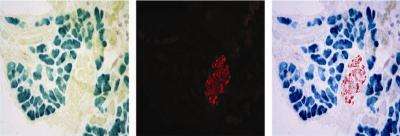
The Penn team engineered mice with a special marker that permanently and selectively labels only pancreatic acinar cells. The mice were then subjected to pancreatic injury by chemicals or surgery. The pancreas was allowed to heal or regenerate itself, and the specific acinar cell marker was followed microscopically in thin slices of pancreatic tissue. "It is very clear that the acinar and islet compartments remain separate during regeneration in a live animal," says Stoffers.
"Although our work shows that acinar cells do not contribute to the insulin-producing compartment of the pancreas in an animal model, it is possible that other strategies might be successful in generating the islet cells," says Stoffers. Ongoing research is examining whether acinar cells from the mice used in this study can be induced to make insulin in tissue culture. "The hope is that these acinar cells would continue to make insulin after being transplanted back into the mouse," says Stoffers.
Source: University of Pennsylvania School of Medicine


