Gene study shows three distinct groups of chimpanzees
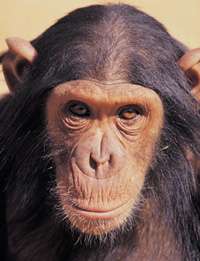
The largest study to date of genetic variation among chimpanzees has found that the traditional, geography-based sorting of chimps into three populations—western, central and eastern—is underpinned by significant genetic differences, two to three times greater than the variation between the most different human populations.
In the April 2007 issue of the journal PLOS Genetics, researchers from the University of Chicago, Harvard, the Broad Institute and Arizona State show that there has been very little detectable admixture between the different populations and that chimps from the central and eastern populations are more closely related to each other than they are to the western "subspecies."
They also devised a simplified set of about 30 DNA markers that zookeepers or primatologists could use to determine the origins of a chimpanzee with uncertain heritage.
"Finding such a marked difference between the three groups has important implications for conservation," said Molly Przeworski, PhD, assistant professor of human genetics at the University of Chicago and a senior author of the study. "It means we have to protect three separate habitats, all threatened, instead of just one."
To unravel the evolutionary history to chimpanzees, the research team collected DNA from 78 common chimpanzees and six bonobos, a separate species of chimpanzee, and examined 310 DNA markers from each.
They found four "discontinuous populations," three of common chimps plus the bonobos. Hybrids, those with at least five percent of their DNA from more than one common chimpanzee population were rare, with most of the hybrid chimps born in captivity.
"We saw little evidence of migration between groups in the wild," said Celine Becquet, first author of the paper and a graduate student in Przeworski's laboratory. "Part of that could stem from the gaps in our samples, but we think most of this separation is genuine, a long-term consequence of geographic isolation."
The original boundaries between groups may have been the emergence and growth of rivers, such as the Congo River, which is thought to be about 1.5 million years old. "Chimps don't swim," Becquet said. "For them, water provides a very effective border." The ongoing loss of habitat has increased the physical separation between the three groups.
The extent of accumulated genetic difference enabled the researchers to speculate about when the different populations separated. They estimate that bonobos, which live south of the Congo River, split off from the ancestors of modern chimpanzees about 800,000 years ago. Western chimps appear to have separated from central and eastern chimpanzees about 500,000 years ago and central and eastern chimps divided about 250,000 years ago.
"Even though the chimp genome has been sequenced, it's amazing how little we know about their evolution and the level of variation within chimpanzees," said Przeworski. "These are our nearest relatives, closer to humans than they are to gorillas, yet we know so little about them, and even less about gorillas and orangutans."
The chimpanzee genome differs from the bonobo genome by about 0.3 percent, which is one-fourth the distance between humans and chimps. Yet chimps and bonobos have radically different social systems, cultures, diets and mating systems.
On the other hand, in this study, looking at three "subspecies" of common chimpanzees, "we found significant genetic variation," said Przeworski, "but there's very little detectable difference between the populations in terms of appearance or behavior."
Source: University of Chicago Medical Center


