Next-generation, high-performance processor unveiled
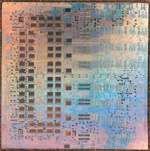
April 24th, 2007 TRIPS Prototype Processor

TRIPS Prototype Processor

The prototype for a revolutionary new general-purpose computer processor, which has the potential of reaching trillions of calculations per second, has been designed and built by a team of computer scientists at The University of Texas at Austin.

The new processor, known as TRIPS (Tera-op, Reliable, Intelligently adaptive Processing System), could be used to accelerate industrial, consumer and scientific computing.

Professors Stephen Keckler, Doug Burger and Kathryn McKinley have been working on underlying technology that culminated in the TRIPS prototype for the past seven years. Their research team designed and built the hardware prototype chips and the software that runs on the chips.

"The TRIPS prototype is the first on a roadmap that will lead to ultra-powerful, flexible processors implemented in nanoscale technologies," said Burger, associate professor of computer sciences.

TRIPS is a demonstration of a new class of processing architectures called Explicit Data Graph Execution (EDGE). Unlike conventional architectures that process one instruction at a time, EDGE can process large blocks of information all at once and more efficiently.

Current "multicore" processing technologies increase speed by adding more processors, which individually may not be any faster than previous processors.

Adding processors shifts the burden of obtaining better performance to software programmers, who must assume the difficult task of rewriting their code to run well on a potentially large number of processors.

"EDGE technology offers an alternative approach when the race to multicore runs out of steam," said Keckler, associate professor of computer sciences.

Each TRIPS chip contains two processing cores, each of which can issue 16 operations per cycle with up to 1,024 instructions in flight simultaneously. Current high-performance processors are typically designed to sustain a maximum execution rate of four operations per cycle.

Though the prototype contains two 16-wide processors per chip, the research team aims to scale this up with further development.

Source: University of Texas at Austin


print this article email this article download pdf blog this article bookmark this article     Digg this Stumble it share on Facebook share on Reddit add to delicious save to Yahoo! bookmarks
4.3/5 after 50 votes


April 24th, 2007 all stories
Technology / Computer Sciences

Comments: 0
Rank: 4.3/5 after 50 votes

  • Stumble this up

  • Digg this

  • Share it:
  • share on Facebook
  • share on MySpace
  • share on Slashdot
  • rss-newsfeed
  • share on Google
  • share on Reddit
  • add to delicious
  • save to Yahoo! bookmarks
  • share on Windows Live
  • Add to Mixx!
Rating: 4.3/5 after 50 votes

  • Related Stories

  • Disease-detecting lab in the palm of your hand
    created Jul 01, 2008 | popularity not rated yet | comments 0
  • IBM Introduces Ready-to-Use Cloud Computing
    created Nov 15, 2007 | popularity not rated yet | comments 0
  • NRL Developing Space 'Tow Truck' Technology For Satellite Operations
    created Aug 27, 2007 | popularity not rated yet | comments 0
  • Maryland Professor Creates Desktop Supercomputer
    created Jun 26, 2007 | popularity not rated yet | comments 0
  • Samsung Unveils New Powerhouse Fusion Memory Solution - OneDRAM
    created Dec 13, 2006 | popularity not rated yet | comments 0

Tags


  • Physicists Demonstrate Quantum Memory with Matter Qubits
    Physicists Demonstrate Quantum Memory with Matter Qubits
    Physics / General Physics
    created Jul 03, 2009 | popularity 4.4 / 5 (17) | comments 1
  • 'Holey' Nanosheets for Wastewater Dye Removal
    Nanotechnology / Nanomaterials
    created Jul 01, 2009 | popularity 5 / 5 (5) | comments 1
  • Jellyfish Robot Swims Like its Biological Counterpart
    Jellyfish Robot Swims Like its Biological Counterpart
    Electronics / Robotics
    created Jun 26, 2009 | popularity 4.4 / 5 (8) | comments 1
  • Could Maxwell's Demon Exist in Nanoscale Systems?
    Could Maxwell's Demon Exist in Nanoscale Systems?
    Physics / General Physics
    created Jun 24, 2009 | popularity 4.4 / 5 (18) | comments 29
  • Living Safely with Robots, Beyond Asimov's Laws
    Living Safely with Robots, Beyond Asimov's Laws
    Electronics / Robotics
    created Jun 22, 2009 | popularity 4.6 / 5 (52) | comments 40
  • Other News

    Japan demands 119 million dlrs in tax from Amazon: report

    Technology / Business

    created 6 hours ago | popularity 3 / 5 (1) | comments 0

    Japanese authorities told a sales affiliate of US retail giant Amazon.com to pay about 119 million dollars in tax for unreported income over a three-year period, a newspaper said Sunday.


    Iconic skyscrapers find new luster by going green (AP)

    Iconic skyscrapers find new luster by going green

    Technology / Energy

    created 7 hours ago | popularity 1 / 5 (1) | comments 0

    (AP) -- When owners of the Empire State Building decided to blanket its towering facade this year with thousands of insulating windows, they were only partly interested in saving energy. They also needed ...


    Geeks double as scourges and sages at media summit

    Technology / Business

    created 2 hours ago | popularity not rated yet | comments 0

    (AP) -- The media moguls attending an annual powwow staged by investment bank Allen & Co. used to be able to rest comfortably in the Idaho mountains as they mulled their next moves.


    UK spy chief's family details posted on Facebook

    Technology / Internet

    created 7 hours ago | popularity not rated yet | comments 0

    (AP) -- He's the spy who came in from the beach.


    Downturn dating: Hearts flutter as markets stutter (AP)

    Downturn dating: Hearts flutter as markets stutter

    Technology / Internet

    created 7 hours ago | popularity not rated yet | comments 0

    (AP) -- Credit the recession for "staycations" and bringing us more game-night parties at home. But also give it a shout for spurring more first dates.