Buckyballs Can Be Nontoxic... Maybe
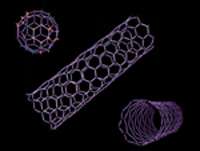
Buckminsterfullerene, a form of carbon containing 60 atoms arranged like the facets of a soccer ball and one of the first and best studied nanoscale structures, has come under scrutiny in recent years over concerns that it may be toxic to living organisms.
While media headlines have largely focused on studies showing that C60-fullerenes, or buckyballs, are toxic to bacterial, algae, and fish, other studies have failed to find such toxicities. Now, a new study from an international team of researchers suggests that the toxic effects of these molecules may result from the polar organic solvents used to dissolve them.
Reporting its work in the journal Nano Letters, a research team headed by Fathi Moussa, Ph.D., of the University of Paris, France, studied the toxicology of buckyballs that were modified to make them soluble in water without the use of polar organic solvents. First, the researchers studied how “carboxylated” C60 molecules accumulated in laboratory animals that were injected with relatively large amounts of this particular buckyball. This experiment showed while C60 accumulated in the liver following the largest doses, the buckyballs did not appear to trigger any apparent toxicities as measured by the investigators.
Encouraged by these studies, the team decided to test the hypothesis that C60 can be a powerful antioxidant that could actually protect the liver from the damage that arises from chemical exposure. Their next experiment, then, involved first dosing rats with C60 and then administering carbon tetrachloride, a molecule known to cause liver damage. As the researchers expected, the animals treated with C60 did not suffer liver damage from carbon tetrachloride, as did control animals that were not dosed with C60 prior to receiving carbon tetrachloride.
The timing of this protection was not, however as expected, that is, the maximum protective effect did not occur when accumulation of C60 in the liver was at its highest. One possible explanation for this discrepancy, offered by the researchers, is that the buckyballs are clumping in the liver, which could affect their antioxidant properties.
An alternative hypothesis, suggested by researchers at the Nanotechnology Characterization Laboratory (NCL) based on their review of the existing scientific literature, is that buckyballs protect against carbon tetrachloride damage not because they are antioxidants but because they kill Kupffer cells, which are believed to be responsible for the toxicity caused by carbon tetrachloride. So despite the claims by the investigators that this study shows conclusively that C60 is not toxic, further work is needed to ensure that these nanoscale structures are not damaging Kupffer cells, which play a critical role in fighting infection.
This work is detailed in a paper titled, “[60]Fullerene is a powerful antioxidant in vivo with no acute or subacute toxicity.” Investigators from New York University also participated in this study. An abstract is available through PubMed. [View Abstract]
Source: National Cancer Institute


