Tree Rings Show Elevated Tungsten Coincides with Nevada Leukemia Cluster
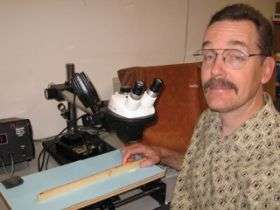
Tungsten began increasing in trees in Fallon, Nev. several years before the town's rise in childhood leukemia cases, according to a new research report.
The amount of tungsten in tree rings from Fallon quadrupled between 1990 and 2002, whereas the amount in tree rings from nearby towns remained the same, according to a research team led by Paul R. Sheppard of The University of Arizona's Laboratory of Tree-Ring Research.
This is the first study that has examined changes in levels of heavy metals in Fallon over time.
"Trees take up metals from the environment and those metals show up in the tree rings. By analyzing chemicals in tree rings, we can look back in time years, and even decades," said Sheppard, a UA assistant professor of dendrochronology.
"Tree ring values for the early 1990s for tungsten are roughly equivalent to nearby towns, but go up in Fallon in the mid-1990s while staying the same in other towns," he said.
Tungsten levels in Fallon trees began increasing in 1994, while levels in neighboring towns remained the same. Since 1997, 17 cases of childhood leukemia have been diagnosed in children who lived in the Fallon area for some time prior to diagnosis. Fallon's high incidence of leukemia has been acknowledged as a leukemia cluster by the Nevada State Health Division.
The tree-ring study by Sheppard and his co-authors Robert J. Speakman of the Smithsonian Institution in Suitland, Md., Dr. Gary Ridenour of Fallon and Mark L. Witten, a UA research professor of pediatrics, is in the May 2007 issue of Environmental Health Perspectives.
In a 2003 U.S. Health and Human Services report investigating possible causes for the leukemia cases in Fallon, www.atsdr.cdc.gov/HAC/PHA/fallonair/finalair.pdf , tungsten was mentioned as "a contaminant of concern because it was elevated in urine samples" collected from Fallon-area residents as part of the investigation.
Previous research by Sheppard and his colleagues found elevated levels of tungsten and cobalt in airborne and surface dust and in lichens in Fallon.
The researchers also analyzed airborne tungsten particles from Fallon to determine their source. The analysis found that the particles "were anthropogenic in origin, not natural." The particles were relatively uniform in size, ranging from about 1.0 to 5.9 micrometers in diameter.
Particles less than 10 micrometers in diameter are small enough to be inhaled and have potential to cause health problems, according to the U.S. Environmental Protection Agency.
The research team's study on the characteristics of the tungsten particles has been accepted for publication by the journal Microscopy and Microanalysis.
Fallon is a community of about 8,000 located in Churchill County about 60 miles east of Reno, Nev. Tungsten is naturally present in soils and rocks in Churchill County and other parts of Nevada.
The metal was mined in the region around Fallon at various sites, including Churchill Butte. Tungsten, tungsten steels and tungsten carbide are used in hardened tools and tools exposed to high temperatures, such as drill bits and the filaments of incandescent light bulbs.
The increase in Fallon's childhood leukemia began around 1997. Heavy metals had been suggested as one possible environmental cause of cancers, so Ridenour and Witten began investigating how to conduct research on Fallon's environment.
Witten approached the UA's Laboratory of Tree-Ring Research to see if LTRR researchers could help him trace Fallon's environmental history backwards in time.
Sheppard, who works in dendrochemistry, was intrigued. He suggested combining tree-ring studies with air sampling.
The tree corers are hardened steel, so he had to figure out how to eliminate potential contamination. Sheppard eventually used laser trimming, as is used for decorative metal mailbox flags, to cut away a thin layer all around each pencil-sized tree core.
The annual rings were then analyzed for heavy metals.
To verify that differences in airborne tungsten could be detected using tree rings, the team tested trees close to and distant from a known source of airborne tungsten in Oregon.
Cores taken from trees close to that tungsten source had more tungsten than cores taken from more distant trees. Few residences and schools are located near the Oregon site.
In Fallon, the team reports finding elevated tungsten levels in about a 1.8 mile (three kilometers) radius that includes residences and schools. According to a February 2003 U.S. Health and Human Services report, www.atsdr.cdc.gov/HAC/PHA/fallonair/finalair.pdf , Fallon has a facility that "houses offices, a laboratory and a tungsten carbide processing operation."
The International Agency for Research on Cancer has declared cobalt and tungsten carbide together to be a probable carcinogen.
The biological research that has been done suggests a relationship between tungsten and cobalt and cancer but is not definitive, the researchers write.
Witten said, "There needs to be more research done to examine the relationship between these metals and the development of leukemia. We're doing that in my lab. It's another step to try and identify a possible environmental cause of leukemia."
Research articles and funding sources:
Sheppard, P.R., R.J. Speakman, G. Ridenour, and M.L. Witten. 2007. Temporal variability of tungsten and cobalt in Fallon, Nevada. Environmental Health Perspectives 115:715-719. The U.S. Environmental Protection Agency, the Gerber Foundation and the Cancer Research and Prevention Foundation funded the research.
Sheppard, P.R., Toepfer, P., Schumacher, E., Rhodes, K., Ridenour, G., and Witten, M.L. In press. Morphological and chemical characteristics of airborne tungsten particles of Fallon, Nevada. Microscopy and Microanalysis. The Gerber Foundation and the Cancer Research and Prevention Foundation funded the research.
Source: University of Arizona


