The brain can rapidly reorganise to recover from damage
May 4, 2007 The brain can rapidly reorganise to recover from damage

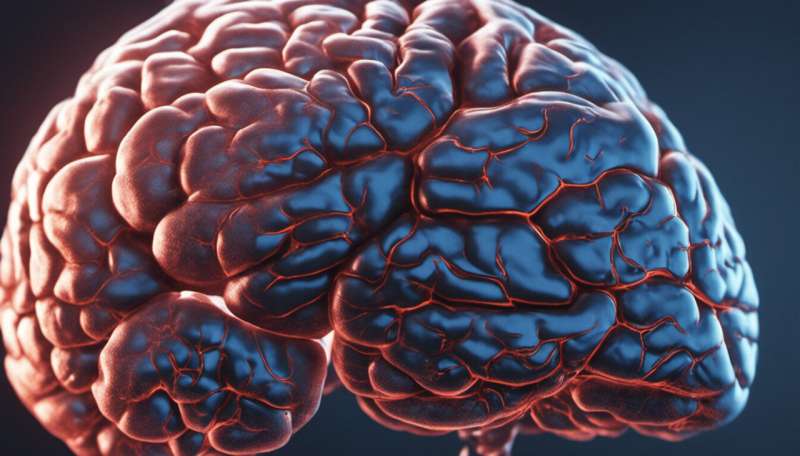
The brain reorganises itself after parts of it become damaged. Credit: iStockphoto

The brain can transfer specific functions to new areas when part of it is damaged, according to Oxford research.

The findings, published in Neuron, are relevant to understanding processes of recovery after stroke.

When brain damage occurs in stroke patients, activity in undamaged parts of the brain often increases. This is particularly prominent in patients with poor recovery.

However, it was not clear whether this was a cause of slow recovery, with activity in the brain becoming chaotic, or part of an adaptive process that helps recovery – the brain trying hard to transfer function over to the healthy hemisphere.

To find out, Dr Jacinta O’Shea and colleagues in the Department of Experimental Psychology and the Centre for Functional MRI of the Brain simulated brain damage in healthy volunteers by using transcranial magnetic stimulation (TMS), temporarily disrupting normal activity in the premotor cortex (a part of the brain that enables people to select which movement to make).

Participants were then asked to perform a task whose success depended on normal levels of activity in the premotor cortex: they had to make one of two finger movements depending on which of several shapes was presented on a computer screen.

As would be expected, after the simulated brain damage participants were initially slower at selecting the correct response. However, after four minutes, performance was back to normal. ‘This suggested to us that the brain might have reorganised itself to compensate for the interference’, says Dr O’Shea.

By imaging participants’ brains, the researchers confirmed that during recovered performance there was increased activity in undisrupted parts of the brain. As final confirmation, they tried disrupting one of the newly active brain areas – and, as predicted, performance on the task was once again impaired. The function of the ‘damaged’ brain area had been moved to the ‘healthy’ half of the brain.

The transfer was specific to the function of the premotor cortex, and it happened only when it was needed for the job,’ said Dr O’Shea. ‘The speed of the reorganisation was also impressive: the brain temporarily reconfigured itself in a matter of minutes.

‘Our findings show just how flexible the brain is.’

Source: University of Oxford


print this article email this article download pdf blog this article bookmark this article     Stumble it Digg this share on Facebook retweet share on Reddit add to delicious
Rate this story - 4.3 /5 (17 votes)


May 4, 2007 all stories

Comments: 0

4.3 /5 (17 votes)
  • Stumble this up

  • Digg this

  • share this

  • hide
  • Related Stories


  • hide
  • Relevant PhysicsForums posts

  • nesfatin
    created 22 hours ago
  • Obsessive Compulsive Disorder
    created Nov 20, 2009
  • West's zone 2 starling resistor respiratory physiology
    created Nov 18, 2009
  • 50-0-50 rule
    created Nov 18, 2009
  • More from Physics Forums - Medical Sciences

Other News

Systems biology approach provides insulin resistance insights

Systems biology approach provides insulin resistance insights

Medicine & Health / Research

created 1hour ago | popularity not rated yet | comments 0

Researchers from the University of California, San Diego recently offered the sharpest-yet picture of how core biochemical pathways in skeletal muscle cells and fat cells are altered in people who suffer from ...


New discovery about the formation of new brain cells

Medicine & Health / Research

created 58 minutes ago | popularity 5 / 5 (1) | comments 0

The generation of new nerve cells in the brain is regulated by a peptide known as C3a, which directly affects the stem cells' maturation into nerve cells and is also important for the migration of new nerve cells through ...


Diabetics show alarming increase in morbid obesity

Medicine & Health / Health

created 58 minutes ago | popularity not rated yet | comments 0

A Loyola University Health System study has found that one out of five Type 2 diabetics is morbidly obese -- approximately 100 pounds or more overweight.


New study links alcohol in pregnancy to child behavior problems

Medicine & Health / Health

created 28 minutes ago | popularity not rated yet | comments 0

A new study from Perth's Telethon Institute for Child Health Research has found evidence that the amount and timing of alcohol consumption in pregnancy affects child behaviour in different ways.


Racial disparity in colon cancer survival not easily explained, researchers say (w/ Video)

Medicine & Health / Cancer

created 1minute ago | popularity not rated yet | comments 0

A new study by University of Alabama at Birmingham (UAB) researchers shows that body-mass index (BMI) and co-existing medical conditions (co-morbidity) do not explain the decreased survival observed among African-Americans ...